


English
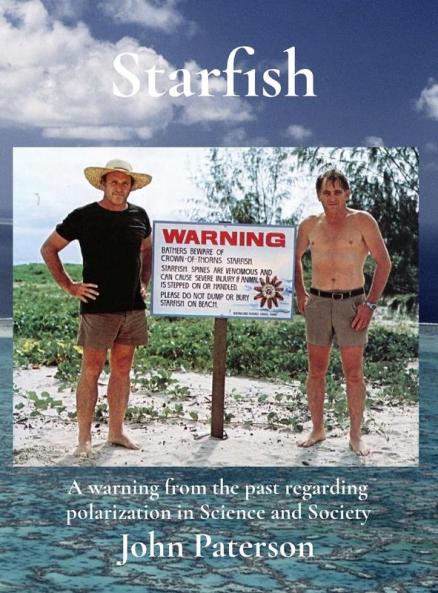


Hardback
₹4652
₹4897
5% OFF
(All inclusive*)
Delivery Options
Please enter pincode to check delivery time.
*COD & Shipping Charges may apply on certain items.
Review final details at checkout.
Looking to place a bulk order? SUBMIT DETAILS

Piracy-free

Assured Quality

Secure Transactions
About The Book
Description
Author
<p><span style=color: rgba(85 85 85 1)>Outbreaks of the crown-of-thorns starfish (</span><em style=color: rgba(85 85 85 1)>Acanthaster planci</em><span style=color: rgba(85 85 85 1)>) have been studied for many years throughout the Indo-West Pacific region and although many explanatory hypotheses have been proposed we do not understand why outbreaks of this starfish occur on some reefs while on other nearby reefs this starfish maintains a stable low population density. On the Great Barrier Reef and elsewhere most starfish research has centered on establishing the scale of Acanthaster outbreaks and the effect of Acanthaster predation on the coral reef community.</span></p><p><br></p><p><span style=color: rgba(85 85 85 1)>The giant triton (</span><em style=color: rgba(85 85 85 1)>Charonia tritonis</em><span style=color: rgba(85 85 85 1)>) and other members of the genus </span><em style=color: rgba(85 85 85 1)>Charonia</em><span style=color: rgba(85 85 85 1)> are known predators of many species of starfish but there are few examples of other species predominantly preying on starfish apart from other starfish. Dr Robert Endean proposed that predation on starfish plays an important role in starfish population stability and discussed the possible causes of </span><em style=color: rgba(85 85 85 1)>Acanthaster</em><span style=color: rgba(85 85 85 1)> outbreaks with particular emphasis on the removal by humans of the predators of adult and juvenile starfish.</span></p><p><br></p><p><span style=color: rgba(85 85 85 1)>While it is recognized that predation can determine the spatial patterns of natural communities and can represent powerful selective pressure in the evolution of prey adaptation the role of natural predators in maintaining high prey diversity and the possible survival strategy of rarity in the coral reef community is unclear with respect to either starfish their predators or their prey.</span></p><p><br></p><p><span style=color: rgba(85 85 85 1)>The giant triton is an extremely beautiful shell and in many parts of the third world it is still being collected in large numbers and sold to tourists as ornaments. As you admire the beautiful shell spare a thought for the hungry mollusk that died. And don't forget they live on starfish. At present little is known of any aspect of the triton's ecology despite its obvious importance in controlling starfish numbers. It is very important to protect this shell by listing on Appendix 2 of the Convention in Trade of Endangered Species (CITES) Treaty.</span></p><p><br></p><p><br></p>
Piracy-free
Assured Quality
Secure Transactions
Delivery Options
Please enter pincode to check delivery time.
*COD & Shipping Charges may apply on certain items.
Review final details at checkout.
Details
ISBN 13
9780645782424
Publication Date
-13-04-2023
Pages
-194
Weight
-623 grams
Dimensions
-216x280x15.88 mm
