


This Book is Out of Stock!
English


Paperback
₹12100
(All inclusive*)
Delivery Options
*COD & Shipping Charges may apply on certain items.
Review final details at checkout.
Looking to place a bulk order? SUBMIT DETAILS
*COD & Shipping Charges may apply on certain items.
Review final details at checkout.
₹12100
Out Of Stock
All inclusive*
About The Book
Description
Author(s)
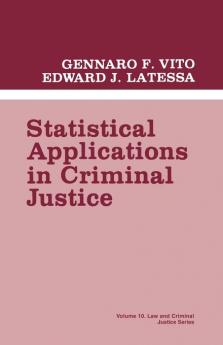
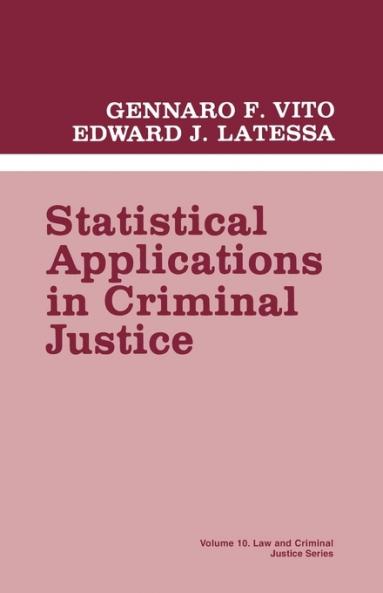
Statistical Applications in Criminal Justice introduces basic statistical concepts in a cookbook approach to guide math-scared students to an understanding of the utility and value of statistical analysis. Using examples drawn entirely from law and criminal justice research the authors provide a user-friendly text for undergraduate and statistically naive graduate students of criminal justice. Vito and Latessa begin with an introduction to simple mathematical notation and proceed into a discussion of the theoretical bases of statistics--with particular attention paid to probability sampling and hypothesis testing. Once the student has developed a firm mastery of these basic tools the authors present some basic statistical techniques commonly used in criminal justice research--t-tests correlations simple regression ANOVA and measures of association. Sample problems are provided to assist the student step-by-step through the application of these techniques. Uniquely written for criminal justice students this book would be an appropriate supplement to accompany a longer research methods or statistics text. In addition professionals who wish to brush up on their skills would find its self-teaching features useful.

Piracy-free

Assured Quality

Secure Transactions

Fast Delivery

Sustainably Printed
Details
ISBN 13
9780803929838
Publication Date
-01-03-1989
Pages
-124
Weight
-156 grams
Dimensions
-140x216x7.42 mm
