

English


Paperback
₹1687
₹1846
8.61% OFF
(All inclusive*)
Delivery Options
Please enter pincode to check delivery time.
*COD & Shipping Charges may apply on certain items.
Review final details at checkout.
Looking to place a bulk order? SUBMIT DETAILS
Delivery Options
Please enter pincode to check delivery time.
*COD & Shipping Charges may apply on certain items.
Review final details at checkout.
About The Book
Description
Author
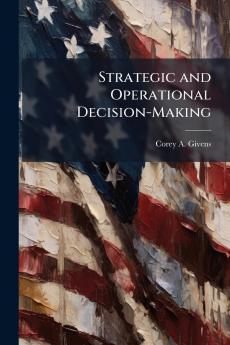
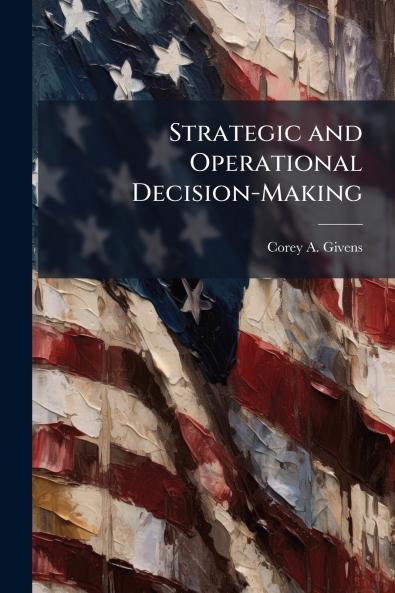
<p>The United States and Japan had a very contentious relationship between 1939 and 1941. During this time Japan's strategic objectives focused on the desire for a policy of national self-sufficiency and of non-reliance on Western imports or economic aid. Its major operational objective was the Dutch East Indies where Japan imported its oil rubber and a number of other goods. Japan fully pursued its objectives as the armed forces provided the foundation for plans to identify protect modernize and expand its national interests. Conversely the weakness of the United States' military restricted its strategic and operational objectives. One of the strategic objectives for the United States was to uphold the principles of the Open Door in East Asia. However the United States was unable to embark upon punitive measures to protest Japan's seizure and economic assimilation of Manchuria. America's key operational objective was maintenance of the Philippines a place from which the United States could project its power. For state actors keeping the elements of national power or Diplomacy Information Military and Economy (DIME) in alignment is significant for national stability. An analysis of America's DIME construct reveals how the weakness of the United States' military forced it to rely on the Diplomatic and Economic elements of national power and this negatively affected the way the United States conducted its strategic and operational decision-making with imperial Japan from 1939-1941. Diplomatically American policy intended to uphold the Open Door Policy in the Far East; however its foreign policy was weak because it did not have the necessary military might to back its demands. Therefore the United States resorted to economic pressure. It implemented a policy of escalating deterrence in an effort to stop Japanese expansion. The economic pressure became too much when the United States deprived Japan of oil which was a major commodity that the Japanese c</p><p>This work has been selected by scholars as being culturally important and is part of the knowledge base of civilization as we know it. This work was reproduced from the original artifact and remains as true to the original work as possible. Therefore you will see the original copyright references library stamps (as most of these works have been housed in our most important libraries around the world) and other notations in the work.</p><p>This work is in the public domain in the United States of America and possibly other nations. Within the United States you may freely copy and distribute this work as no entity (individual or corporate) has a copyright on the body of the work.</p><p>As a reproduction of a historical artifact this work may contain missing or blurred pages poor pictures errant marks etc. Scholars believe and we concur that this work is important enough to be preserved reproduced and made generally available to the public. We appreciate your support of the preservation process and thank you for being an important part of keeping this knowledge alive and relevant.</p>

Piracy-free

Assured Quality

Secure Transactions

Fast Delivery

Sustainably Printed
Details
ISBN 13
9781288322473
Publication Date
-21-11-2012
Pages
-54
Weight
-92 grams
Dimensions
-156x234x2.95 mm
