

English


Paperback
₹1959
₹2124
7.77% OFF
(All inclusive*)
Delivery Options
Please enter pincode to check delivery time.
*COD & Shipping Charges may apply on certain items.
Review final details at checkout.
Looking to place a bulk order? SUBMIT DETAILS

Piracy-free

Assured Quality

Secure Transactions
About The Book
Description
Author
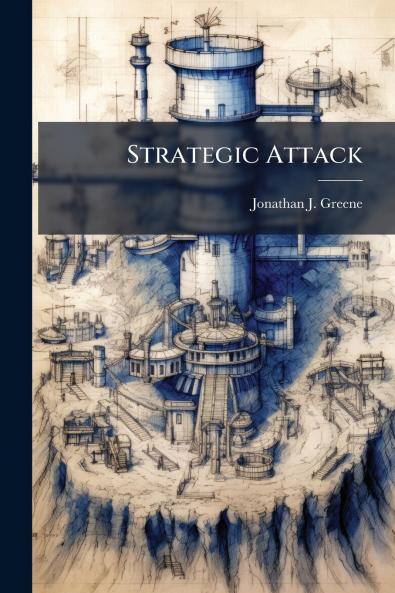
<p>This paper examines the new definition of strategic attack contained in Air Force Doctrine and seeks to uncover why it remains a fixture in American military operations despite the controversy regarding its efficacy. Since the advent of aircraft airpower advocates have expounded on the idea of causing an enemy's collapse by circumventing fielded combat forces and directly striking political economic and industrial centers of gravity. When put to the test in World War II Korea and Vietnam heavy bombers employing strategic attack with conventional weapons seemed to produce mixed results because of poor weapons accuracy bomber vulnerability and insufficient targets. Only the use of nuclear weapons appeared to prove the decisiveness of strategic attack. Thus strategic attack is often associated with nuclear weapons heavy bomber aircraft and specific target sets. Moreover since strategic attack flies in the face of traditional force-on-force warfare many critics believe that overzealous Airmen attempting to dominate joint operations wildly exaggerate the efficacy of conventional strategic attack. To alleviate these misperceptions the Air Force completely revised its Doctrine Document 2-1.2 Strategic Attack in September 2003. Using historical case studies this paper tests the new definition and explains why strategic attack continues to appeal to high-level decision makers and military commanders. This paper asserts that the definition is valid but could be improved if it excluded standard target sets. Additionally strategic attack has lasting influence because it can: 1) provide an alternative option when a ground commitment is not feasible 2) create disproportionate effects to the effort expended and 3) directly affect enemy will without engaging enemy fielded forces.</p><p>This work has been selected by scholars as being culturally important and is part of the knowledge base of civilization as we know it. This work was reproduced from the original artifact and remains as true to the original work as possible. Therefore you will see the original copyright references library stamps (as most of these works have been housed in our most important libraries around the world) and other notations in the work.</p><p>This work is in the public domain in the United States of America and possibly other nations. Within the United States you may freely copy and distribute this work as no entity (individual or corporate) has a copyright on the body of the work.</p><p>As a reproduction of a historical artifact this work may contain missing or blurred pages poor pictures errant marks etc. Scholars believe and we concur that this work is important enough to be preserved reproduced and made generally available to the public. We appreciate your support of the preservation process and thank you for being an important part of keeping this knowledge alive and relevant.</p>
Piracy-free
Assured Quality
Secure Transactions
Delivery Options
Please enter pincode to check delivery time.
*COD & Shipping Charges may apply on certain items.
Review final details at checkout.
Details
ISBN 13
9781288228591
Publication Date
-29-10-2012
Pages
-104
Weight
-161 grams
Dimensions
-156x234x5.58 mm
