


This Book is Out of Stock!
English


Paperback
₹10282
₹14813
30.59% OFF
(All inclusive*)
Delivery Options
*COD & Shipping Charges may apply on certain items.
Review final details at checkout.
Looking to place a bulk order? SUBMIT DETAILS

Piracy-free

Assured Quality

Secure Transactions
About The Book
Description
Author
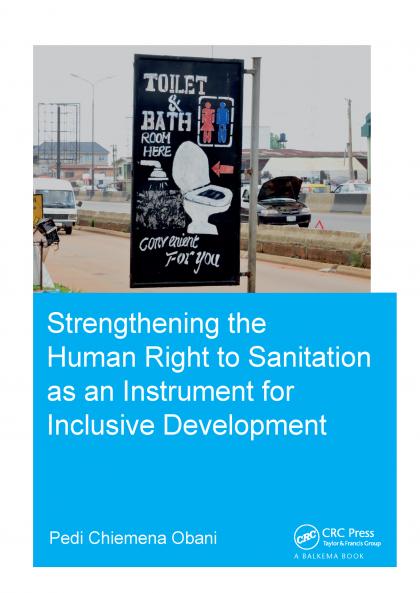
<p>Over a third of the current 7.3 billion people worldwide are burdened with poor sanitation services. The resulting social relational and ecological exclusion make the realisation of the human right to sanitation (HRS) a critical concern development concern. However the literature has evolved in a largely compartmentalised manner focusing on the formal recognition of the HRS in domestic legal systems without sufficiently addressing the drivers of poor sanitation services. </p><p>This research expounds on the impact of the HRS on human wellbeing and the environment within the context of a developing country like Nigeria as a case study. The findings show that contrary to the focus in the literature the drivers of poor sanitation services are not confined to legal factors such as the formal recognition of the HRS within domestic legal systems. Rather the drivers include social economic and environmental limitations to improved sanitation services. </p><p>Based on the findings the book argues that the focus in the literature on the formal recognition of the HRS in national legal systems is insufficient for tackling the main drivers of poor sanitation services. It is therefore necessary to reformulate the HRS discourse using complementary governance instruments that advance social relational and ecological inclusion.</p>
Piracy-free
Assured Quality
Secure Transactions
*COD & Shipping Charges may apply on certain items.
Review final details at checkout.
₹10282
₹14813
30% OFF
Paperback
Out Of Stock
All inclusive*
Details
ISBN 13
9781138618480
Publication Date
-26-06-2018
Pages
-386
Weight
-766 grams
Dimensions
-173.99x246.13x20.58 mm
