


English



Hardback
₹7687
₹10084
23.77% OFF
(All inclusive*)
Delivery Options
Please enter pincode to check delivery time.
*COD & Shipping Charges may apply on certain items.
Review final details at checkout.
Looking to place a bulk order? SUBMIT DETAILS
Delivery Options
Please enter pincode to check delivery time.
*COD & Shipping Charges may apply on certain items.
Review final details at checkout.
About The Book
Description
Author
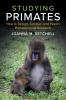
Primatology draws on theory and methods from diverse fields including anatomy anthropology biology ecology medicine psychology veterinary sciences and zoology. The more than 500 species of primate range from tiny mouse lemurs to huge gorillas and primatologists collect data in a variety of environments including in the field research facilities museums sanctuaries zoos and from the literature. The variability in research interests study animals and research sites means that there are no standard protocols for how to study primates. Nevertheless asking good questions and designing appropriate studies to answer them are vital to produce high quality science. This accessible guide for graduate students and post-doctoral researchers explains how to develop a research question formulate testable hypotheses and predictions design and conduct a project and report the results. The focus is on research integrity and ethics throughout and the book provides practical advice on overcoming common difficulties researchers face.

Piracy-free

Assured Quality

Secure Transactions

Fast Delivery

Sustainably Printed
Details
ISBN 13
9781108421713
Publication Date
-26-09-2019
Pages
-364
Weight
-581 grams
Dimensions
-152x229x20.64 mm
