


English


Hardback
₹21752
(All inclusive*)
Delivery Options
Please enter pincode to check delivery time.
*COD & Shipping Charges may apply on certain items.
Review final details at checkout.
Looking to place a bulk order? SUBMIT DETAILS
Delivery Options
Please enter pincode to check delivery time.
*COD & Shipping Charges may apply on certain items.
Review final details at checkout.
About The Book
Description
Author(s)
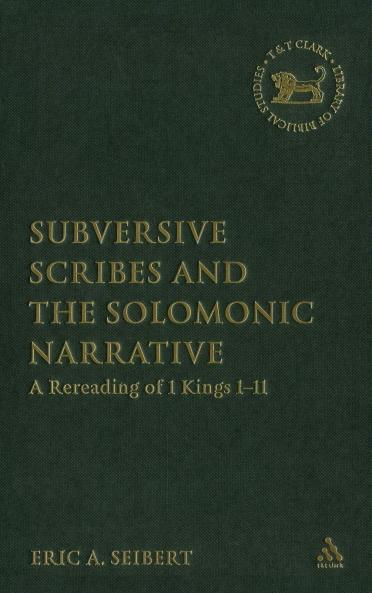
<p>Subversive Scribes and the Solomonic Narrative considers 1 Kgs <br>1-11 through the optics of propaganda and subversion with primary attention <br>given to subversive readings of portions of the Solomonic narrative. Seibert <br>explores the social context in which scribal subversion was not only possible <br>but perhaps even necessary and examines texts that covertly undermine the <br>legitimacy or the legacy of Solomon. <p/><br>The book is divided into two parts. In the first Seibert develops <br>definitions of propaganda and subversion and notes other studies which have <br>understood certain biblical texts to function in these ways. Primary <br>consideration is given to developing a theory of subversive scribal activity in <br>this section of the book. An important distinction is made between submissive <br>scribes individuals who wrote what they were told and subversive scribes <br>individuals who did otherwise. Since many scribes were writing for the very <br>people who paid them those wanting to engage in subversive literary activity <br>had to do so carefully and to a certain extent covertly lest they be detected <br>and exposed. Yet their critique could not be so obscure that none could detect <br>it. There needed to be enough clues to allow like-minded scribes to read the <br>text and appreciate the critique but not so many that opponents could charge <br>such scribes with sedition. <p/><br>In the second part of the book Seibert applies this theory of scribal <br>subversion to various passages in 1 Kgs 1-11. An extended discussion is given <br>to 1 Kgs 1-2 with the remainder of the Solomonic narrative being treated more <br>episodically. The focus is on passages which look suspiciously like the work of <br>a subversive scribe and/or which have subversive potential. It is argued that <br>scribes could-and sometimes did-intentionally encode a critique of the <br>king/kingship in the text and that one of the most effective ways they <br>accomplished this was by cloaking scribal subversion in the guise of propaganda.</p>

Piracy-free

Assured Quality

Secure Transactions

Fast Delivery

Sustainably Printed
Details
ISBN 13
9780567027719
Publication Date
-15-06-2006
Pages
-223
Weight
-397 grams
Dimensions
-152.4x228.6x13.46 mm
