


This Book is Out of Stock!
English


₹3293
(All inclusive*)
Paperback
Delivery Options
*COD & Shipping Charges may apply on certain items.
Review final details at checkout.
Looking to place a bulk order? SUBMIT DETAILS
*COD & Shipping Charges may apply on certain items.
Review final details at checkout.
₹3293
Out Of Stock
All inclusive*
About The Book
Description
Author
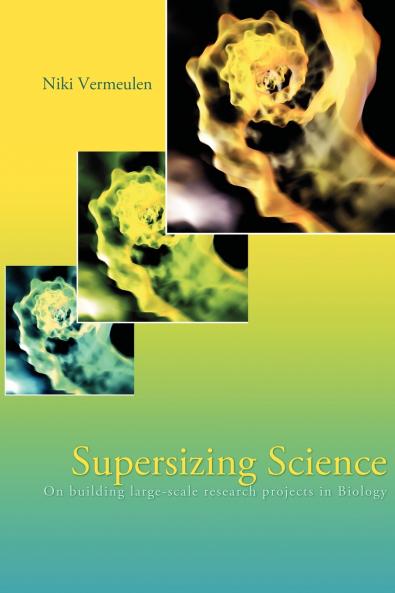
In recent years there has been a clear rise in scientific collaboration as well as in studies on the subject. While most scholars examine disciplines traditionally known to be collaborative such as physics and space research this book focuses on biology. It investigates the growing collaboration in the life sciences or the emergence of what is called 'big biology'. While the Human Genome Project is often presented as the first large-scale research project in biology cooperation in the life sciences has a longer history. A comparison between centralised 'big physics' and 'big biology' reveals how the latter has a networked structure which evolved in interaction with the integration of information and communication technologies. By concentrating on the construction of these networks three contemporary large-scale research collaborations are analysed: the Census of Marine Life that aims to make an inventory of life in the oceans the Silicon Cell initiative that wants to design a replica of a cell in a computer and the VIRGO consortium which investigates host-virus interaction to develop a new therapy against influenza. This book demonstrates how the process of making science bigger or the 'supersizing of science' transforms the ways in which science is organised while it also changes the work of scientists involved. As such this has both scholarly and professional implications for the next generation of scientists.

Piracy-free

Assured Quality

Secure Transactions

Fast Delivery

Sustainably Printed
Details
ISBN 13
9781599423647
Publication Date
-04-10-2010
Pages
-234
Weight
-323 grams
Dimensions
-152x229x12.52 mm
