

English


Paperback
₹1896
₹2065
8.18% OFF
(All inclusive*)
Delivery Options
Please enter pincode to check delivery time.
*COD & Shipping Charges may apply on certain items.
Review final details at checkout.
Looking to place a bulk order? SUBMIT DETAILS

Piracy-free

Assured Quality

Secure Transactions
About The Book
Description
Author
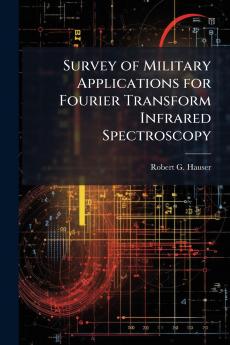
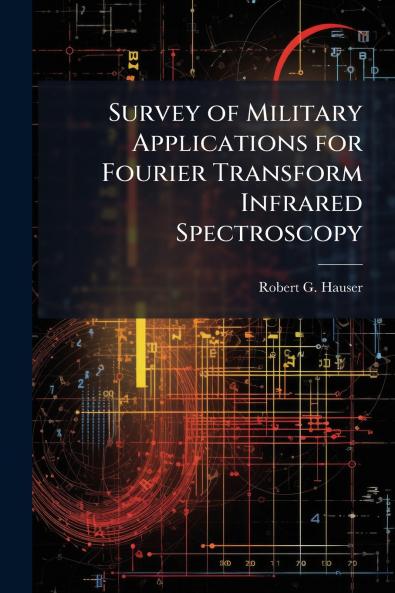
<p>In Part 1-Determining Vertical Atmospheric Temperature and Moisture Profiles from Radiance Data and Validating Atmospheric Transmittance Models with a Fourier Transform Infrared (FTIR) Spectrometer two meteorological applications and one environmental application were investigated. A method to retrieve vertical atmospheric temperature and moisture profiles by applying a least-squares solution to atmospheric radiance observed at the surface in the 4.3-mm carbon dioxide absorption band was analyzed. The method did not work. Weighting functions calculated between 2250 cm-1 and 2400 cm-1 from the surface looking up at a 45-degree angle were a maximum at the surface so no unique solution for temperature retrieval by height could be determined. Atmospheric radiances observed under various meteorological conditions and viewing angles were compared to radiances calculated using the Moderate Resolution Transmittance Code (MODTRAN). The utility of the FTIR spectrometer for environmental monitoring was demonstrated by identifying emissions from a coal-burning plant. Constituent gases identified were CO2 CO O3 HCl SO2 and N2O. In Part 2--Spectral Features of Conventional Warhead Explosions results are presented from a field test where an FTIR spectrometer was used to collect data of conventional warhead explosions from 7 December 1998 to 11 December 1998 at Fallon Naval Air Station NV. Data of controlled detonations of statically displayed Mk 82 Mk 83 and Mk 84 bombs; High-speed Anti-Radiant Missiles (HARM); Tomahawk Land-Attack Missiles (TLAM); and C-4 plastic explosives were collected over the 1800 cm-1 to 6000 cm-1 spectral band at resolutions of 16 cm-1. Spectral plots of the explosions showed there were unique spectral features associated with some warhead detonations. The preliminary results of this effort suggest it may be possible to identify the type of warhead detonated by its spectral signature alone.</p><p>This work has been selected by scholars as being culturally important and is part of the knowledge base of civilization as we know it. This work was reproduced from the original artifact and remains as true to the original work as possible. Therefore you will see the original copyright references library stamps (as most of these works have been housed in our most important libraries around the world) and other notations in the work.</p><p>This work is in the public domain in the United States of America and possibly other nations. Within the United States you may freely copy and distribute this work as no entity (individual or corporate) has a copyright on the body of the work.</p><p>As a reproduction of a historical artifact this work may contain missing or blurred pages poor pictures errant marks etc. Scholars believe and we concur that this work is important enough to be preserved reproduced and made generally available to the public. We appreciate your support of the preservation process and thank you for being an important part of keeping this knowledge alive and relevant.</p>
Piracy-free
Assured Quality
Secure Transactions
Delivery Options
Please enter pincode to check delivery time.
*COD & Shipping Charges may apply on certain items.
Review final details at checkout.
Details
ISBN 13
9781288344536
Publication Date
-28-11-2012
Pages
-150
Weight
-224 grams
Dimensions
-156x234x8.27 mm
