

English


₹3650
₹4885
25.28% OFF
(All inclusive*)
Paperback
Delivery Options
Please enter pincode to check delivery time.
*COD & Shipping Charges may apply on certain items.
Review final details at checkout.
Looking to place a bulk order? SUBMIT DETAILS
Delivery Options
Please enter pincode to check delivery time.
*COD & Shipping Charges may apply on certain items.
Review final details at checkout.
About The Book
Description
Author
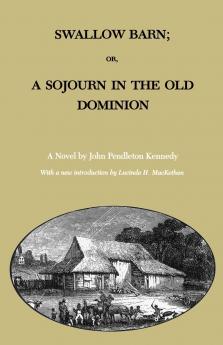
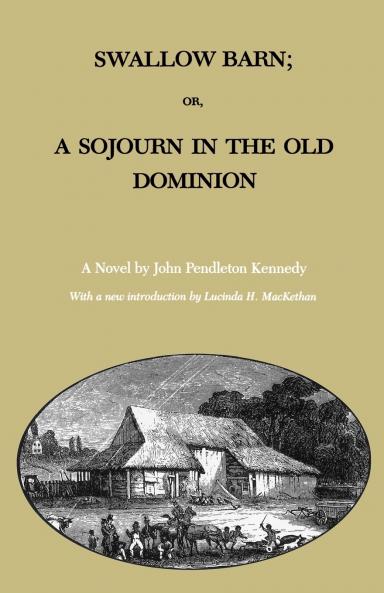
Originally published in 1832 and revised in 1851 Swallow Barn John Pendleton Kennedy’s novel of antebellum life on a tidewater Virginia plantation was described by its author as “variously and interchangeably partaking of the complexion of a book of travels a diary a collection of letters a drama and a history.” Swallow Barn has returned from oblivion many times in the past 150 years in part because it resists categorization and retains its originality. It is a novel that is not a novel written by a man who was and was not a southerner or even by his own reckoning a writer.. Swallow Barn began as a series of letters written by a Mark Littleton (Kennedy) to his hometown neighbor Zachary Huddlestone of Preston Ridge New York. Littleton visiting his Virginia relatives at their farm called Swallow Barn on the James River not far from Richmond told his friend that he would write a “full true and particular account of all my doings or rather my seeings and thinkings” while he was among his genial relatives. But Kennedy soon dropped the pose of letter writer and devoted successive chapters to sketches of Virginia country life. In choosing to write about the “manners” of his own region he won not only esteem as an American author but recognition for a way of life toward which an open hostility was developing in the North.. Lucinda MacKethan’s introduction to this edition considers biographical information and the cultural and literary forces that operated to make Swallow Barn a unique as well as a representative product of its period. MacKethan also discusses Kennedy’s design for the novel the ideological and artistic strategies that governed the choices and changes he made as he created what is now regarded as one of the most important fictional portrayals of plantation society by one intimately involved in that place and time.

Piracy-free

Assured Quality

Secure Transactions

Fast Delivery

Sustainably Printed
Details
ISBN 13
9780807113226
Publication Date
-01-04-1986
Pages
-568
Weight
-660 grams
Dimensions
-140x216x32.13 mm
