



This Book is Out of Stock!
English



Paperback
₹5232
₹6280
16.69% OFF
(All inclusive*)
Delivery Options
*COD & Shipping Charges may apply on certain items.
Review final details at checkout.
Looking to place a bulk order? SUBMIT DETAILS
*COD & Shipping Charges may apply on certain items.
Review final details at checkout.
₹5232
₹6280
16% OFF
Paperback
Out Of Stock
All inclusive*
About The Book
Description
Author
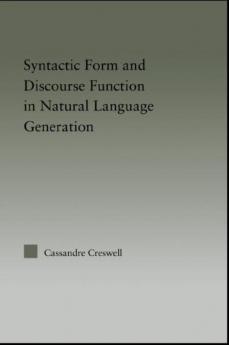
Users of natural languages have many word orders with which to encode the same truth-conditional meaning. They choose contextually appropriate strings from these many ways with little conscious effort and with effective communicative results. Previous computational models of when English speakers produce non-canonical word orders like topicalization left-dislocation and clefts fail. The primary goal of this book is to present a better model of when speakers choose to produce certain non-canonical word orders by incorporating the effects of discourse context and speaker goals on syntactic choice. This book makes extensive use of previously unexamined naturally occurring corpus data of non-canonical word order in English both to illustrate the points of the theoretical model and to train the statistical model.

Piracy-free

Assured Quality

Secure Transactions

Fast Delivery

Sustainably Printed
Details
ISBN 13
9781138990777
Publication Date
-22-06-2016
Pages
-196
Weight
-273 grams
Dimensions
-152x229x10.67 mm
