


English



Paperback
₹1689
₹1852
8.8% OFF
(All inclusive*)
Delivery Options
Please enter pincode to check delivery time.
*COD & Shipping Charges may apply on certain items.
Review final details at checkout.
Looking to place a bulk order? SUBMIT DETAILS

Piracy-free

Assured Quality

Secure Transactions
About The Book
Description
Author
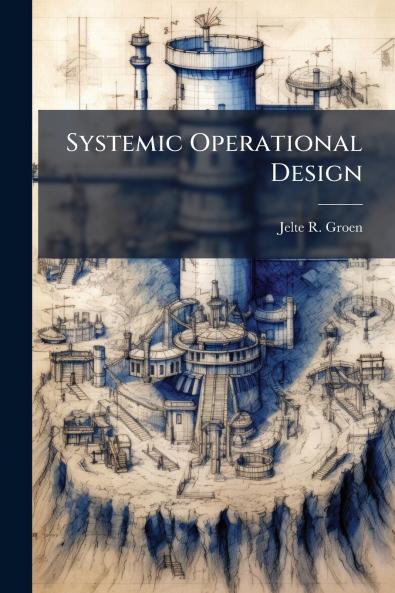
<p>The Armed Forces of the Netherlands are currently in a reorganization process in order to improve the balance between tasks and capabilities. Specific materiel is being disposed of and organizations are downsized to achieve this balance. The financial margin created this way is used to invest in high quality weapon systems. Part of this reorganization is the monopolization of operational level planning at the Defense Staff level to facilitate joint operations. The Directorate of Operations in the Defense Staff has been made responsible for this planning effort and is now in charge of all planning for joint operations of the Dutch Armed Forces. The planning process used by the Directorate is NATO's Operational Planning Process. The Operational Theory Research Institute in Israel has developed a different approach for designing operations called Systemic Operational Design. The approach is based on a different theoretical background than the Operational Planning Process and uses alternative ways to achieve its products. The Operational Planning Process acknowledges the fundamental importance of design for an operation but does not specify how to construct this design. Therefore a dedicated design process might offer opportunities for improvement of the Operational Planning Process. This monograph will suggest an improvement of the Operational Planning Process through the application of Systemic Operational Design. Although further experimentation is necessary to explore the possibilities in the Dutch setting initial experiences with the process are encouraging.</p><p>This work has been selected by scholars as being culturally important and is part of the knowledge base of civilization as we know it. This work was reproduced from the original artifact and remains as true to the original work as possible. Therefore you will see the original copyright references library stamps (as most of these works have been housed in our most important libraries around the world) and other notations in the work.</p><p>This work is in the public domain in the United States of America and possibly other nations. Within the United States you may freely copy and distribute this work as no entity (individual or corporate) has a copyright on the body of the work.</p><p>As a reproduction of a historical artifact this work may contain missing or blurred pages poor pictures errant marks etc. Scholars believe and we concur that this work is important enough to be preserved reproduced and made generally available to the public. We appreciate your support of the preservation process and thank you for being an important part of keeping this knowledge alive and relevant.</p>
Piracy-free
Assured Quality
Secure Transactions
Delivery Options
Please enter pincode to check delivery time.
*COD & Shipping Charges may apply on certain items.
Review final details at checkout.
Details
ISBN 13
9781288323227
Publication Date
-21-11-2012
Pages
-62
Weight
-103 grams
Dimensions
-156x234x3.37 mm
