

English


Paperback
₹1705
₹1849
7.79% OFF
(All inclusive*)
Delivery Options
Please enter pincode to check delivery time.
*COD & Shipping Charges may apply on certain items.
Review final details at checkout.
Looking to place a bulk order? SUBMIT DETAILS

Piracy-free

Assured Quality

Secure Transactions
About The Book
Description
Author
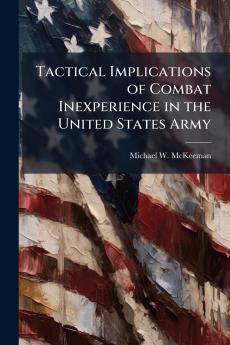
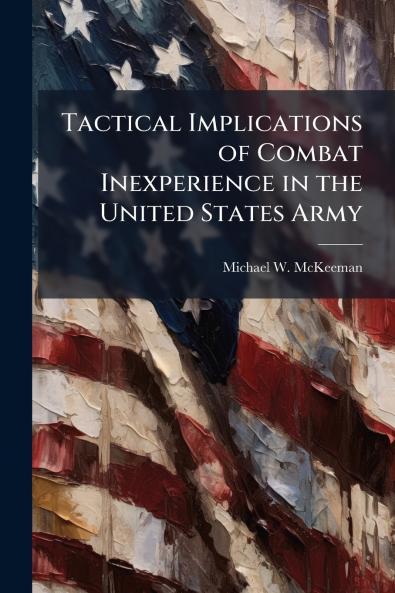
<p>As war veterans retire from the military the U.S. Army transitions to a generation of soldiers with no combat experience. This monograph examines this phenomenon of combat inexperience and assesses the tactical implications for the Army. To consider the impact of combat inexperience on the outcome of battle this monograph weighs the significance of combat inexperience against other factors which also affect a battle's final result. This monograph first reviews literature and research which address various factors influencing the outcome of battle. In each case - S.L.A. Marshall's 'Men Against Fire' ; Samuel A. Stouffer's 'The American Soldier: Combat and Its Aftermath' ; and Richard Holmes'; 'Arts of War'; - the monograph examines some of the characteristics of combat inexperience and how the soldier's consequent behavior affects a battle. The monograph discusses a number of common themes surrounding a soldier's conduct in war. Next this monograph tests the literature and research by surveying three battles which occur at the outset of World War I World War II and the Korean War. The intent is to consider each battle in its historical context to examine specific significant events in each battle and to analyze the battles conduct and outcome in light of the literature and research previously reviewed. Finally a series of conclusions and implications for the Army's future highlight the requirement to train the Army realistically for its combat mission. Although research suggests that combat inexperience is a factor in the outcome of battle its significance must be considered in the context of several factors - doctrine tactics training and leadership among others. This monograph adds impetus to the importance of battle drills standardization and stressful leader development.</p><p>This work has been selected by scholars as being culturally important and is part of the knowledge base of civilization as we know it. This work was reproduced from the original artifact and remains as true to the original work as possible. Therefore you will see the original copyright references library stamps (as most of these works have been housed in our most important libraries around the world) and other notations in the work.</p><p>This work is in the public domain in the United States of America and possibly other nations. Within the United States you may freely copy and distribute this work as no entity (individual or corporate) has a copyright on the body of the work.</p><p>As a reproduction of a historical artifact this work may contain missing or blurred pages poor pictures errant marks etc. Scholars believe and we concur that this work is important enough to be preserved reproduced and made generally available to the public. We appreciate your support of the preservation process and thank you for being an important part of keeping this knowledge alive and relevant.</p>
Piracy-free
Assured Quality
Secure Transactions
Delivery Options
Please enter pincode to check delivery time.
*COD & Shipping Charges may apply on certain items.
Review final details at checkout.
Details
ISBN 13
9781288323609
Publication Date
-21-11-2012
Pages
-58
Weight
-98 grams
Dimensions
-156x234x3.16 mm
