

English


Hardback
₹2197
(All inclusive*)
Delivery Options
Please enter pincode to check delivery time.
*COD & Shipping Charges may apply on certain items.
Review final details at checkout.
Looking to place a bulk order? SUBMIT DETAILS

Piracy-free

Assured Quality

Secure Transactions
About The Book
Description
Author
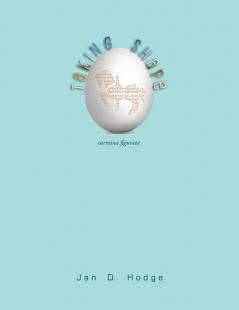
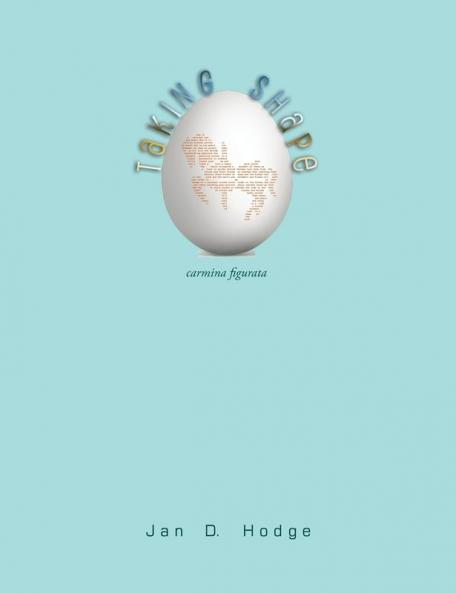
<p>An eclectic mix of shapes and subjects populate <em>Taking Shape</em>&mdash;Jan D.&nbsp;Hodge&rsquo;s full-length collection of <em>carmina figurata</em> (sometimes called shaped poems pattern poetry or figure poems). Hodge&rsquo;s many masterpieces include&nbsp;depictions of a saxophone a Madonna and Child a combination piano/guillotine and other silhouettes of amazing difficulty and detail. These poems are not only visually stunning they are also sonically beautiful and retain a transcendent freedom while conforming to both illustrative and metrical constraints. <em>Taking Shape</em> is a visual feast of inspired poetry.</p><p><strong>PRAISE FOR <em>TAKING SHAPE:</em></strong></p><p>Are not all printed formal poems shaped poems? The sonnet the hymn the sestina and the ghazal all have characteristic shapes rather like boxes that confine their subjects. In Jan D. Hodge&rsquo;s <em>Taking Shape</em> the subjects have burst from their cages and confront us immediately with what they are. Then the words they are made of can reveal their inner beings. The long closure of &ldquo;Spring&rdquo; describes the best way to read these poems. I have long known what prayer is but I never knew what one looked like until I read &ldquo;Madonna and Child.&rdquo;<br />&nbsp;&nbsp;&nbsp;&nbsp;&nbsp;&nbsp;&nbsp;&nbsp;&mdash; Fred Chappell author of <em>The Fred Chappell Reader</em></p><p>Here is a perfect matching of shapes and poetry.&nbsp; Through a wide-ranging array of subjects and tones Hodge&rsquo;s mastery of language within such challenging constraints is truly impressive.&nbsp; Syntax and rhythm metaphor and symbol (see for instance &ldquo;The One That Got Away&rdquo; or &ldquo;The Lesson of the Snow&rdquo;) conversational snippets and quatrains are surprisingly nuanced. Even the occasional poems&mdash;wedding elegy Valentine&rsquo;s day Halloween Christmas an early morning poetry reading&mdash;find new things to say and striking ways to say them. These poems reward reading again and again.<br />&nbsp;&nbsp;&nbsp;&nbsp;&nbsp;&nbsp;&nbsp;&nbsp;&mdash; Robert J. Conley author of <em>Mountain Windsong</em></p><p>Jan D. Hodge is the master par excellence of <em>carmina figurata.</em> In <em>Taking Shape</em> you&rsquo;ll see such word-pictures as the Chinese ideogram for spring; a harpsichord poised before a guillotine; a still life with quill pen and ink bottle T-square and drafting triangle. More amazing still Hodge forms many of the intricate images with metered language&mdash;in one case in medieval alliterative verse! In a poem about baseball Hodge writes &ldquo;forgiveness/ is the best/ we dare hope for in this bruised world/ the thinnest/ chance that lets us somehow/ slide home free&rdquo;;&nbsp; here &ldquo;only by grace . . . can we be safe.&rdquo; Hodge knows of grace his poems are full of grace and <em>Taking Shape </em>like grace itself is a gift of utter beauty.<br />&nbsp;&nbsp;&nbsp;&nbsp;&nbsp;&nbsp;&nbsp;&nbsp;&mdash; Vince Gotera Editor <em>North American Review</em></p><p><strong>ABOUT THE AUTHOR:</strong></p><p>Having grown up in a letterpress print shop in small town Michigan Jan D. Hodge received his BA and MA degrees from the University of Michigan and his PhD from the University of New Mexico where he wrote his dissertation on Charles Dickens. He taught at Rockford (Illinois) College and at Morningside College in Sioux City Iowa. His poems have appeared in <em>Iambs &amp; Trochees American Arts Quarterly Defined Providence</em> and many other print and online journals.</p><p>&nbsp;</p>
Piracy-free
Assured Quality
Secure Transactions
Delivery Options
Please enter pincode to check delivery time.
*COD & Shipping Charges may apply on certain items.
Review final details at checkout.
Details
ISBN 13
9781927409589
Publication Date
-31-08-2015
Pages
-80
Weight
-270 grams
Dimensions
-191x235x6.35 mm
