

Tamil



Hardback
₹1156
₹1285
10.04% OFF
(All inclusive*)
Delivery Options
Please enter pincode to check delivery time.
*COD & Shipping Charges may apply on certain items.
Review final details at checkout.
Looking to place a bulk order? SUBMIT DETAILS

Piracy-free

Assured Quality

Secure Transactions
About The Book
Description
Author
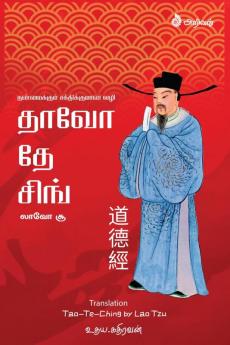
<p>Tao-Te-Ching is one of the classics of spiritual literature written more than two thousand years ago. The Tao Te Ching describes the Tao (compared to Brahman) as the source and ideal of all existence: it is unseen but not transcendent immensely powerful yet supremely humble. Many people act unnaturally upsetting the natural balance of the Tao. The Tao Te Ching intends to lead people to return to their natural state in harmony with Tao. Wu Wei literally non-action or not acting is a central concept of the Tao Te Ching. The concept of wu wei is multifaceted and reflected in the words' multiple meanings even in English translation; it can mean not doing anything not forcing not acting in the theatrical sense creating nothingness acting spontaneously and flowing with the moment</p><p>According to Chinese tradition Laozi (Lao Tzu) lived in the 6th century BCE. Historians variously contend that Laozi is a synthesis of multiple historical figures that he is a mythical figure or that he actually lived in the 5th-4th century BCE concurrent with the Hundred Schools of Thought and Warring States Period. As a result of being a aentral figure in Chinese culture both nobility and common people claim Lao Tzu in their lineage.</p>
Piracy-free
Assured Quality
Secure Transactions
Delivery Options
Please enter pincode to check delivery time.
*COD & Shipping Charges may apply on certain items.
Review final details at checkout.
Details
ISBN 13
9798892339612
Publication Date
-09-01-2024
Pages
-216
Weight
-444 grams
Dimensions
-152.4x228.6x13.18 mm
