


English


Paperback
₹3595
₹4272
15.85% OFF
(All inclusive*)
Delivery Options
Please enter pincode to check delivery time.
*COD & Shipping Charges may apply on certain items.
Review final details at checkout.
Looking to place a bulk order? SUBMIT DETAILS
Delivery Options
Please enter pincode to check delivery time.
*COD & Shipping Charges may apply on certain items.
Review final details at checkout.
About The Book
Description
Author
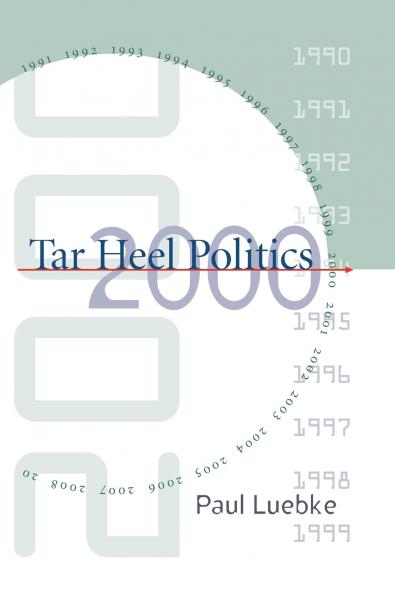
Offering an insightful analysis of North Carolina political trends and personalities Paul Luebke moves beyond the usual labels of Republican and Democrat conservative and liberal. In <i>Tar Heel Politics 2000</i> he argues that North Carolina&#x2019;s real political battle is between two factions of the state&#x2019;s political and economic elite: modernizers and traditionalists. Modernizers draw their strength from the bankers developers news media and other urban interests that support growth he says. Traditionalists in contrast are rooted in small-town North Carolina and fundamentalist Protestantism tied to agriculture and low-wage industries and threatened by growth and social change. Both modernizers and traditionalists are linked with politicians who represent their interests.<br/>An updated and revised version of Luebke&#x2019;s <i>Tar Heel Politics: Myths and Realities</i> (1990) <i>Tar Heel Politics 2000</i> highlights the resurgence of the southern Republican Party for the first time in a century and discusses a number of significant changes that have occurred over the last decade. These include the institutionalization of a viable two-party system in the General Assembly the further shift of native-born whites throughout the South into the Republican voting column and ideological conflict in North Carolina that parallels to some extent the post-1994 battles between the Republican Congress and the Clinton White House. In addition the book provides a detailed analysis of the political appeal of Senator Jesse Helms and draws on Luebke&#x2019;s insights as a member of the North Carolina State House since 1991.

Piracy-free

Assured Quality

Secure Transactions

Fast Delivery

Sustainably Printed
Details
ISBN 13
9780807847565
Publication Date
-30-11-1998
Pages
-288
Weight
-413 grams
Dimensions
-156x234x16.47 mm
