

English


Paperback
₹4352
₹5467
20.4% OFF
(All inclusive*)
Delivery Options
Please enter pincode to check delivery time.
*COD & Shipping Charges may apply on certain items.
Review final details at checkout.
Looking to place a bulk order? SUBMIT DETAILS
Delivery Options
Please enter pincode to check delivery time.
*COD & Shipping Charges may apply on certain items.
Review final details at checkout.
About The Book
Description
Author
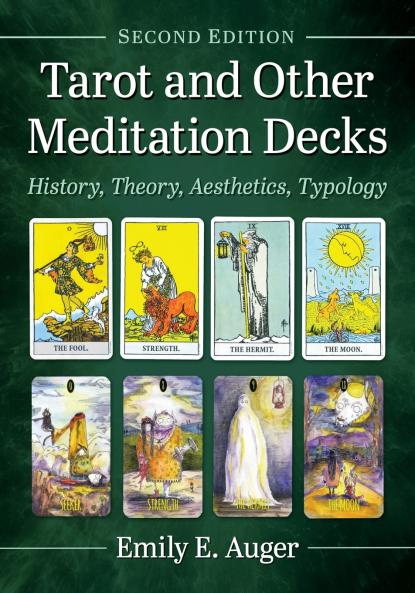
<p> Arthur E. Waite and artist Pamela Colman Smith's <I>Rider-Waite Tarot</I> (1909) is the most popular Tarot in the world. Today it is affectionately referred to as the <I>Rider-Waite-Smith Tarot</I> in recognition of the high quality of Smith's contributions. Waite and Smith's deck has become the gold standard for identifying and analyzing contemporary Tarot and other meditation decks based on archetypes.</p><p> Developments in both visual and literary history and theory have influenced Tarot since its fifteenth-century invention as a game and subsequent adaptations for esotericism cartomancy and meditation. This analysis consider Tarot in relation to established modern and postmodern art movements such as Symbolism Surrealism and Pattern and Decoration Art as well as the concepts and theories informing both the dominance and the dissolution of the modernist grid and hierarchical priorities. This work also explores the close connection between Tarot and the invention of the literary novel and includes new material on the representation of Tarot in film and fiction. A new chapter addresses the growing influence of the archetypal shadow and shadow work on Tarot as an artistic form narrative genre and practice in the new millennium.</p>

Piracy-free

Assured Quality

Secure Transactions

Fast Delivery

Sustainably Printed
Details
ISBN 13
9781476686790
Publication Date
-10-03-2023
Pages
-278
Weight
-495 grams
Dimensions
-178x254x14.83 mm
