




English





Hardback
₹13526
₹17183
21.28% OFF
(All inclusive*)
Delivery Options
Please enter pincode to check delivery time.
*COD & Shipping Charges may apply on certain items.
Review final details at checkout.
Looking to place a bulk order? SUBMIT DETAILS

Piracy-free

Assured Quality

Secure Transactions
About The Book
Description
Author
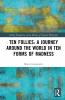
<p><i>Ten Follies: A Journey Around the World in Ten Forms of Madness</i> focuses on a critical question in the history of psychiatry: to what extent does psychopathology describe phenomena that exist before or beyond their description? Marco Innamorati probes the view that any description of a psychopathological phenomenon is to a significant extent the result of a construction by the subject describing it or a co-construction made by the clinician and the patient—a perspective also known as the “constructivist” approach.</p><p>Starting from the work of the philosopher and historian of science Ian Hacking who proposed the concept of “transient mental illness” i.e. an “illness that appears at a given time in a given place and then disappears” (Hacking 1998) Innamorati explores some forms of madness that seem to arise in a particular environment and specific historical circumstances developing through a kind of epidemic and then disappearing almost definitively. The author evaluates strengths and weaknesses of the “constructivist” approach by juxtaposing evolving hermeneutical questions to cultural factors. From hysteria to demonic possession from the “mad travellers” to arctic shamanism until the recent mushrooming of the hikikomori phenomenon</p><p><i>Ten Follies</i> is an unconventional “journey around the world in ten forms of madness” which takes the reader through astonishing stories of suffering and healing. Against the trend of mapping a single globalised discourse of “folly” this book embraces a kind of philosophical perspectivism (“ten follie<i>s</i>”) which echoes the contemporary cultural transformation of the many narratives of “madness”.</p>
Piracy-free
Assured Quality
Secure Transactions
Delivery Options
Please enter pincode to check delivery time.
*COD & Shipping Charges may apply on certain items.
Review final details at checkout.
Details
ISBN 13
9781032771014
Publication Date
-20-06-2025
Pages
-142
Weight
-305 grams
Dimensions
-155.96x233.93x9.3 mm
