

English


Hardback
₹11524
(All inclusive*)
Delivery Options
Please enter pincode to check delivery time.
*COD & Shipping Charges may apply on certain items.
Review final details at checkout.
Looking to place a bulk order? SUBMIT DETAILS
Delivery Options
Please enter pincode to check delivery time.
*COD & Shipping Charges may apply on certain items.
Review final details at checkout.
About The Book
Description
Author
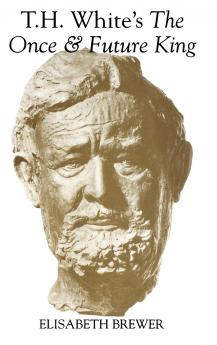
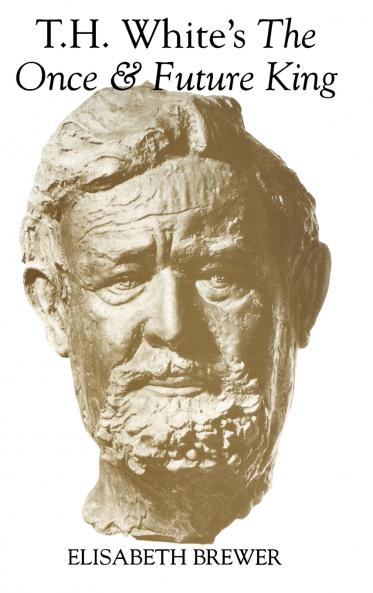
A critical study of T.H. White''s classic Arthurian tetralogy. The Once and Future King defies classification. Is it for children or for adults? Is it fantasy or a psychological novel? In its great range it encompasses poetry and farce comedy and tragedy -and sudden flights of schoolboy humour. White''s `footnote to Malory'' (his own phrase) resulted in the last major retelling of the story based on Malory''s Morte Darthur and Elisabeth Brewer explores the literary context of White''s finest work as wellas considering his aims and achievement in writing it. White''s story of Arthur begins with his `enfances'' set in an imaginary medieval England but it is far removed from the conventional historical novel. White was writing in wartime England a country increasingly absorbed by a need to find an antidote to war. Through the medium of the Arthurian story he found his own voice his unique contribution to keeping alive the flame of civilisation. Malory''s chivalric virtues are rejected in favour of White''s own twentieth-century values; the love affair of Lancelot and Guenever is interpreted in terms of modern psychology. The books which eventually made up The Once and Future Kingof 1958 appeared in distinctly different editions. In discussing theseElisabeth Brewer looks at some of the ways in which White drew on his own personal experience at a deep psychological level while also incorporating into his story material inspired by his antiquarian pursuits and by his years as a schoolmaster. She completes her study with an account of White''s use of historical material and the relationship of The Once and Future King to the Morte Darthur. ELISABETH BREWER lectured in English at Homerton College Cambridge. She is the author of books and articles on Chaucer and the Arthurian legends.

Piracy-free

Assured Quality

Secure Transactions

Fast Delivery

Sustainably Printed
Details
ISBN 13
9780859913935
Publication Date
-23-11-1993
Pages
-248
Weight
-450 grams
Dimensions
-156x234x15.88 mm
