


English



₹3269
₹4198
22.13% OFF
(All inclusive*)
Paperback
Delivery Options
Please enter pincode to check delivery time.
*COD & Shipping Charges may apply on certain items.
Review final details at checkout.
Looking to place a bulk order? SUBMIT DETAILS
Delivery Options
Please enter pincode to check delivery time.
*COD & Shipping Charges may apply on certain items.
Review final details at checkout.
About The Book
Description
Author
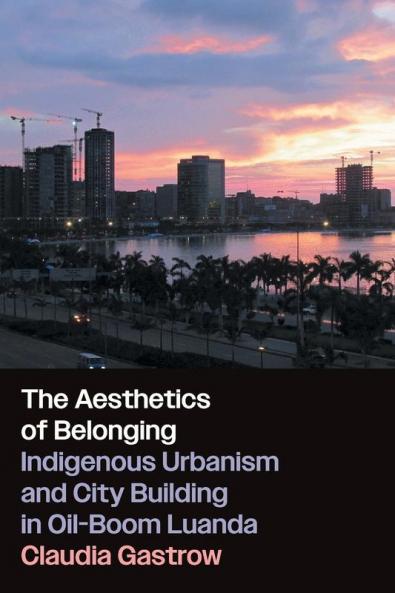
After centuries of colonial rule the end of Angola&#x2019;s three-decade civil war in 2002 provided an irresistible opportunity for the government to reimagine the Luanda cityscape. Awash with petrodollars cultivated through strategic foreign relationships President Jos&#xE9; Eduardo dos Santos rolled out a national reconstruction program that sought to transform Angola&#x2019;s capital into what he considered to be a modern world-class metropolis. Until funds dried up in 2014 the program&#x2014;in conjunction with sweeping private investments in real estate&#x2014;involved mass demolitions of vernacular architecture to make way for high-rise buildings large-scale housing projects and commercial centers. The program thus underestimated the values enshrined in the materials and designs of Luanda&#x2019;s existing &#x201C;informally&#x201D; constructed neighborhoods or <i>musseques</i>.<br/><br/><i>The Aesthetics of Belonging</i> explores the political significance of aesthetics in the remaking of the city. Claudia Gastrow&#x2019;s archival and ethnographic work which includes interviews with city planners architects nonprofit leaders and urban dwellers shows how government infrastructure projects and foreign-inspired designs came to embody displacement and exclusion for many. This Gastrow argues catalyzed a countermovement an aesthetic dissent rooted in critically reframing informal urbanism as Indigenous&#x2014;a move that enabled the possibility of recognizing the political potential of informal settlements as spaces that produce belonging.

Piracy-free

Assured Quality

Secure Transactions

Fast Delivery

Sustainably Printed
Details
ISBN 13
9781469682181
Publication Date
-29-10-2024
Pages
-242
Weight
-350 grams
Dimensions
-156x234x13.96 mm
