


English



Paperback
₹4844
₹5089
4.81% OFF
(All inclusive*)
Delivery Options
Please enter pincode to check delivery time.
*COD & Shipping Charges may apply on certain items.
Review final details at checkout.
Looking to place a bulk order? SUBMIT DETAILS

Piracy-free

Assured Quality

Secure Transactions
About The Book
Description
Author
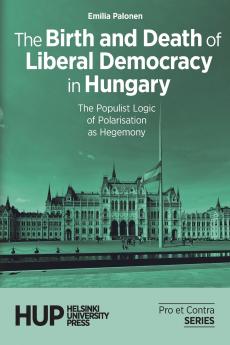
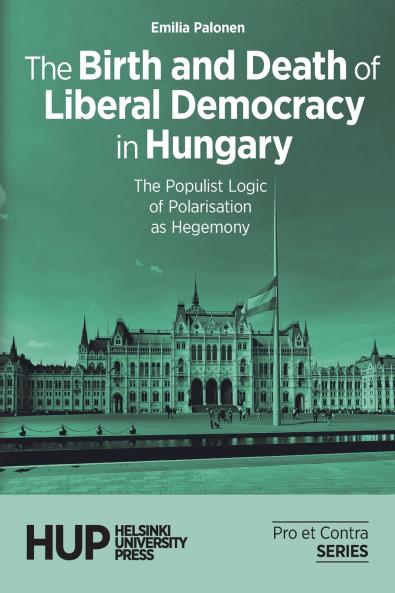
<p><em style=color: rgba(0 0 0 1); background-color: rgba(0 0 0 0)>The Birth and Death of Liberal Democracy in Hungary</em><span style=color: rgba(0 0 0 1); background-color: rgba(0 0 0 0)> explores the transformation of Hungary's political landscape in the post-communist era and demonstrates how political populism and polarisation became mainstream in the country. How did a nation once regarded as a model of democratic transition become an electoral autocracy and an exemplar for populist illiberal post-liberal and radical-right leaders across the globe?</span></p><p><span style=color: rgba(0 0 0 1); background-color: rgba(0 0 0 0)>In the book Emilia Palonen critiques the simplistic use of terms such as 'populism' and 'illiberalism' emphasising the importance of understanding the relational and performative nature of political discourse. She highlights how populist logic - framing politics as a struggle between two camps - has fuelled polarisation and eroded democratic engagement. The Hungarian case illustrates that populism and polarisation are not external threats to democracy but can arise from within it. Prime Minister Viktor Orbán's consolidation of power was not the result of a sudden authoritarian takeover but rather the outcome of long-term political polarisation and widespread public disillusionment with democracy. This shift was enabled by the failures of left-wing parties and a growing public appetite for stability even at the expense of democratic norms.</span></p><p><span style=color: rgba(0 0 0 1); background-color: rgba(0 0 0 0)>Palonen draws particularly on Ernesto Laclau's theory of populism to argue that political polarisation is not merely a reflection of societal divisions but a strategic logic of political meaning-making. This hegemonic polarisation fosters rigid political identities and antagonisms making constructive democratic debate increasingly difficult. Rather than focusing solely on demographic or interest-based divisions Palonen emphasises the role of affect identification and rhetorical articulation in shaping political subjectivities.</span></p><p><span style=color: rgba(0 0 0 1); background-color: rgba(0 0 0 0)>The global rise of populism is contextualised within this framework. Palonen stresses that populism is not a model of governance but a style of mobilisation that fills the symbolic void at the heart of democracy.</span></p><p><span style=color: rgba(0 0 0 1); background-color: rgba(0 0 0 0)>Ultimately the book calls for a rethinking of democratic theory and practice advocating for an agonistic model of democracy in which political contestation is embraced rather than suppressed. It warns that polarisation though often attributed to populist leaders is sustained by both sides of the political spectrum and reflects deeper structural and discursive dynamics.</span></p>
Piracy-free
Assured Quality
Secure Transactions
Delivery Options
Please enter pincode to check delivery time.
*COD & Shipping Charges may apply on certain items.
Review final details at checkout.
Details
ISBN 13
9789523691360
Publication Date
-30-07-2025
Pages
-322
Weight
-438 grams
Dimensions
-152x229x17.1 mm
