

Spanish


Paperback
₹1674
(All inclusive*)
Delivery Options
Please enter pincode to check delivery time.
*COD & Shipping Charges may apply on certain items.
Review final details at checkout.
Looking to place a bulk order? SUBMIT DETAILS
Delivery Options
Please enter pincode to check delivery time.
*COD & Shipping Charges may apply on certain items.
Review final details at checkout.
About The Book
Description
Author(s)
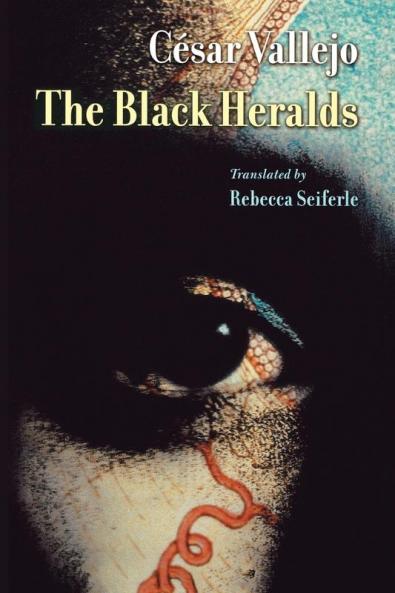
<p>Throughout his life C&#233;eacute;sar Vallejo (1892&ndash;1938) focused on human suffering and the isolation of people victimized by inexplicable forces. One of the great Spanish language poets he merged radical politics and language consciousness resulting in the first examples of a truly new world poetry.</P><p><I>The Black Heralds </I>is Vallejo's first book and contains a wide range of poems from love sonnets in which he struggles to free his erotic life from the bounds of Spanish Catholicism to the linguistically inventive sequence Imperial Nostalgias where he parodies with considerable savagery the pastoral romanticism of Indian and rural life.</p><p>In this bilingual volume translator Rebecca Seiferle attempts to undo the colonization of Vallejo in other translations. As Seiferle writes in her introduction: Reading and translating Vallejo has been a long process of trying to meet him on his own terms to discover what those terms were within the contexts of his particular time and finally taking his word for it.</P><p><B>from Our Bread</B></P><p>And in this frigid hour when the earth<BR>smells of human dust and is so sad<br>I want to knock on every door<BR>and beg forgiveness of I don't know whom<BR>and bake bits of fresh bread for him<br>here in the oven of my heart...!<br></P><p><B>C&#233;sar Vallejo </B>(1892&ndash;1938) was born in Peru to a family of mixed Spanish and native descent. He wrote two books of poetry the second of which was partly composed during a short prison term. Disappointed by the reception of his poetry in his own country Vallejo moved to Paris where he became active in Marxist politics and the antifascist campaign in Spain while publishing essays political -articles a play and short stories. Vallejo died in Paris in utter poverty on the day Franco's armies entered Madrid.</P>

Piracy-free

Assured Quality

Secure Transactions
Details
ISBN 13
9781556591990
Publication Date
-01-10-2003
Pages
-240
Weight
-331 grams
Dimensions
-152x229x13.85 mm
