

English



₹7355
(All inclusive*)
Paperback
Delivery Options
Please enter pincode to check delivery time.
*COD & Shipping Charges may apply on certain items.
Review final details at checkout.
Looking to place a bulk order? SUBMIT DETAILS
Delivery Options
Please enter pincode to check delivery time.
*COD & Shipping Charges may apply on certain items.
Review final details at checkout.
About The Book
Description
Author
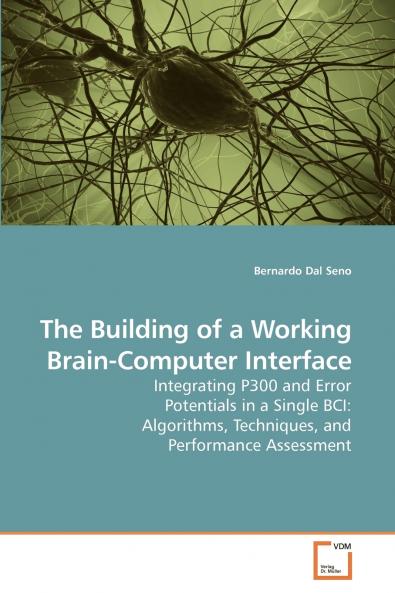
For decades electroencephalography (EEG) the recording of brain potentials through electrodes on the scalp has been used to evaluate neurological disorders and to study the brain. The availability of powerful digital hardware and analysis algorithms has opened the door to the brain-computer interface (BCI) field where the user's brain activity is directly used to issue commands to a device. Potentially this could be helpful for people whose movements are impaired by a disease or a trauma. This book presents the development of a BCI based on the P300 and error potentials in the EEG of the user. Though both potentials have been used in previous work here they are integrated in a single system with newly developed algorithms suitable for real-time application. This integration prompted for a more general way to assess the performance of a BCI than those in the literature and a user-centered approach to this issue is proposed. The book focuses on a wide range of engineering issues from practical ones such as synchronization to more general questions such as performance making it appealing to readers with interests at different levels in the BCI field.

Piracy-free

Assured Quality

Secure Transactions

Fast Delivery

Sustainably Printed
Details
ISBN 13
9783639244700
Publication Date
-13-04-2010
Pages
-172
Weight
-242 grams
Dimensions
-150x220x9.44 mm
