

English


₹4056
(All inclusive*)
Paperback
Delivery Options
Please enter pincode to check delivery time.
*COD & Shipping Charges may apply on certain items.
Review final details at checkout.
Looking to place a bulk order? SUBMIT DETAILS
Delivery Options
Please enter pincode to check delivery time.
*COD & Shipping Charges may apply on certain items.
Review final details at checkout.
About The Book
Description
Author(s)
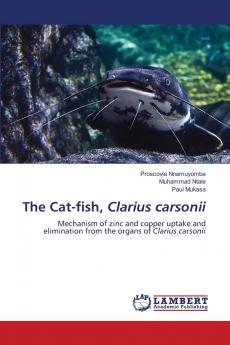
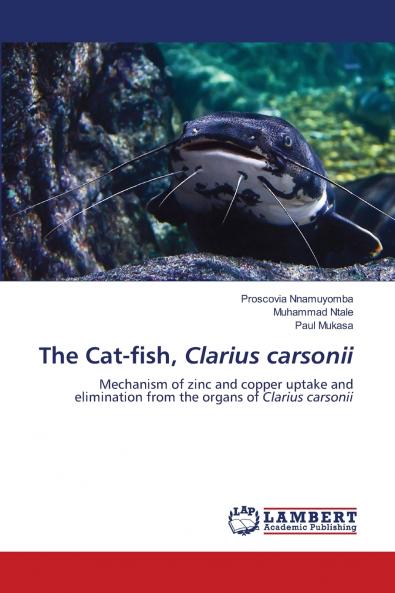
Clarias carsonii is a potential bioindicator of metal pollution since it is commonly found in pristine and metal-contaminated environments. This study utilised a biokinetic model to investigate the physiological processes controlling zinc (Zn) and copper (Cu) uptake and elimination in C. carsonii. A transplantation experiment assessed Zn and Cu bioaccumulation in the gills gut liver and muscle under four treatment regimens: uncontaminated water and food uncontaminated water with contaminated food contaminated water with uncontaminated food and contaminated water and food. Over 70 days of exposure followed by 70 days of elimination the dissolved Zn and Cu uptake rates (ku) ranged from 0.04-0.54 Lgd for Zn and 0.05-0.84 Lgd for Cu with the highest uptake in the gills and lowest in the liver. Efflux rates (ke) were faster in the gills and gut with values of 0.84 d and 0.51 d for Cu and 0.35 d and 0.28 d for Zn respectively. The model further indicated that >90% of metal accumulation in the gills was due to dissolved metals while dietary exposure was the main pathway for the gut muscle and liver.

Piracy-free

Assured Quality

Secure Transactions

Fast Delivery

Sustainably Printed
Details
ISBN 13
9786208434366
Publication Date
-18-03-2025
Pages
-68
Weight
-106 grams
Dimensions
-150x220x4.09 mm
