

English


Paperback
₹2174
₹2193
0.87% OFF
(All inclusive*)
Delivery Options
Please enter pincode to check delivery time.
*COD & Shipping Charges may apply on certain items.
Review final details at checkout.
Looking to place a bulk order? SUBMIT DETAILS
Delivery Options
Please enter pincode to check delivery time.
*COD & Shipping Charges may apply on certain items.
Review final details at checkout.
About The Book
Description
Author
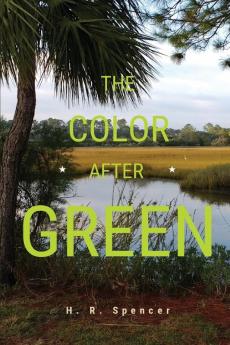
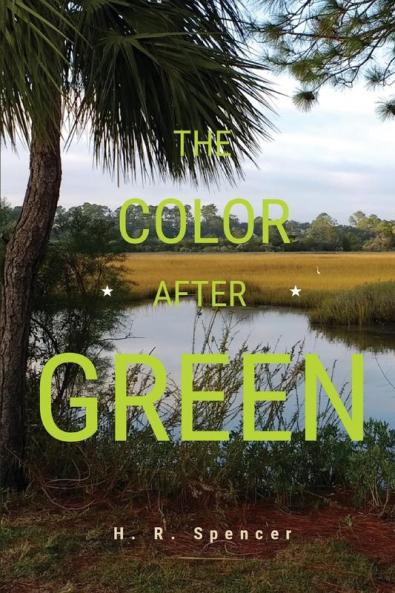
<p>&nbsp;&nbsp;&nbsp;&nbsp;&nbsp;&nbsp;&nbsp;&nbsp;&nbsp;&nbsp;&nbsp; From the very first poem where sprawling development drives deer out of their forest home onto into a suburban neighborhood South Carolina poet H. R. Spencer&#39;s work confronts too the human challenge to understand our place in the natural order. <u>The Color After Green</u> crosses unique human territories from the dangerous work of urchin divers in Maine to the manufacture of deadly chemicals that spill into our waters and remain poisonous a half century later. In another poem the harvesting of horseshoe crabs where products from their blood are used to create medications becomes a fable where the Grandest Horseshoe laments their collective endangerment with a Monarch butterfly and a Red Knot sandpiper. The effects of global warming show up in the title poem and in &quot;Eco-Travel&quot; a vivid description of a trip through the &quot;rainless rain forests&quot; of Costa Rica.</p><p>&nbsp;&nbsp;&nbsp;&nbsp;&nbsp;&nbsp;&nbsp;&nbsp;&nbsp;&nbsp;&nbsp; Other poems deal simply with the speaker&#39;s observations of the world around him whether kayaking and encountering small epiphanies such as the water striders &quot;dimpled symmetries&quot; mirroring those of the paddle or the &quot;throaty red luminescence&quot; of the green anole &quot;capturing sunlight&quot; on a button bush. He watches the spider lily their buds &quot;swell buckle open at their crown&quot; and explode into a &quot;leafless botanical firework&quot; or the rats in the corn crib with &quot;wet bituminous eyes.&quot; The poet&#39;s background as a visual artist lends authenticity to a poem about the last reflections of John James Audubon on his life&#39;s work or later where he speaks through the voice of Georgia O&#39;Keeffe describing the emotions behind her flower paintings.&nbsp;</p><p>&nbsp;&nbsp;&nbsp;&nbsp;&nbsp;&nbsp;&nbsp;&nbsp;&nbsp;&nbsp;&nbsp; Toward the end the book becomes more a personal journey through the poet&#39;s own childhood his rich engagement with the life in and on Virginia&#39;s historic James River and the passing of the generations there. The final two poems are a terrifying description of surviving Hurricane Hugo in 1989 South Carolina and a meditation on the death of his teacher James Dickey that unites the spiritual kingdom of the poet with his <em>deliverance</em> back into &quot;the kingdom of ferns of mosses&quot; with &quot;emotions pre-vertebrate&quot; and &quot;his motion now the motion of the earth.&quot;&nbsp;</p><p>&nbsp;&nbsp;&nbsp;&nbsp;&nbsp;&nbsp;&nbsp;&nbsp;&nbsp;&nbsp;&nbsp; These poems reflect on the beauty and complexity of nature and Man&#39;s relationship to the natural world but don&#39;t hesitate also talk explicitly about our troubled environment and how our foolish sometimes selfish attitudes can lead toward its destruction.</p>

Piracy-free

Assured Quality

Secure Transactions

Fast Delivery

Sustainably Printed
Details
ISBN 13
9781635348828
Publication Date
-22-03-2019
Pages
-76
Weight
-116 grams
Dimensions
-152x229x4.62 mm
