


English



Paperback
₹1760
(All inclusive*)
Delivery Options
Please enter pincode to check delivery time.
*COD & Shipping Charges may apply on certain items.
Review final details at checkout.
Looking to place a bulk order? SUBMIT DETAILS
Delivery Options
Please enter pincode to check delivery time.
*COD & Shipping Charges may apply on certain items.
Review final details at checkout.
About The Book
Description
Author
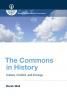
<b>An argument that the commons is neither tragedy nor paradise but can be a way to understand environmental sustainability.</b><p>The history of the commons--jointly owned land or other resources such as fisheries or forests set aside for public use--provides a useful context for current debates over sustainability and how we can act as good ancestors. In this book Derek Wall considers the commons from antiquity to the present day as an idea an ecological space an economic abstraction and a management practice. He argues that the commons should be viewed neither as a tragedy of mismanagement (as the biologist Garrett Hardin wrote in 1968) nor as a panacea for solving environmental problems. Instead Walls sees the commons as a particular form of property ownership arguing that property rights are essential to understanding sustainability. How we use the land and its resources offers insights into how we value the environment.</p><p>After defining the commons and describing the arguments of Hardin's influential article and Elinor Ostrom's more recent work on the commons Wall offers historical case studies from the United States England India and Mongolia. He examines the power of cultural norms to maintain the commons; political conflicts over the commons; and how commons have protected or failed to protect ecosystems. Combining intellectual and material histories with an eye on contemporary debates Wall offers an applied history that will interest academics activists and policy makers.</p>

Piracy-free

Assured Quality

Secure Transactions

Fast Delivery

Sustainably Printed
Details
ISBN 13
9780262534703
Publication Date
-08-09-2017
Pages
-184
Weight
-206 grams
Dimensions
-137x203x10.75 mm
