

English


₹5894
₹6167
4.43% OFF
(All inclusive*)
Hardback
Delivery Options
Please enter pincode to check delivery time.
*COD & Shipping Charges may apply on certain items.
Review final details at checkout.
Looking to place a bulk order? SUBMIT DETAILS
Delivery Options
Please enter pincode to check delivery time.
*COD & Shipping Charges may apply on certain items.
Review final details at checkout.
About The Book
Description
Author(s)
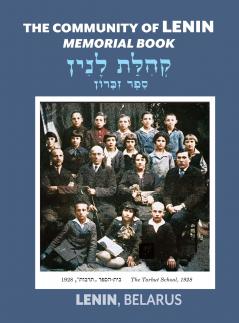
<p class=ql-align-justify>Lenin was a small shtetl now located in southern Belarus about 50 miles east of Pinsk and close to Ukraine's northern border. At various times it was part of the Polish-Lithuanian Commonwealth the Russian empire the reconstituted Polish republic between the world wars and then the Soviet Union until Belarus became an independent nation in 1991. The Jewish population was 753 in the Russian census of 1897 rising to 928 in 1921.</p><p><span style=background-color: rgba(255 255 255 1); color: rgba(0 0 0 1)>The main occupation of the Jewish population was crafts: there were cobblers tailors carpenters ironsmiths and later there were some shopkeepers mostly grocers. Forest and lumber-related occupations also played a key role in the economy. But Lenin Jews - with very few exceptions - lived a difficult life hemmed in by a lack of industry in the region and restrictions on livelihoods and landownership particular in the times of the Russian Czar.</span></p><p><span style=background-color: rgba(255 255 255 1); color: rgba(0 0 0 1)>The town was situated in a region of forests and marshes. The area was prone to flooding when rainy autumns and melting winter snows caused the Pripet River to flood cutting off connections to other towns. The book describes what this setting meant in the town center which was located in an area so muddy that all of the sand wagons that stumbled in it were not able to manage. Even during the summer when the land had dried up around it the mud reached to the knees. On the main street a walkway made of thick wooden planks was constructed leading from one end of the street to the other and ditches were dug on both sides.</span></p><p><span style=background-color: rgba(255 255 255 1); color: rgba(0 0 0 1)>The sanitary situation was less than ideal. Houses clustered in a small space surrounded by water and swamps did not have the necessary sanitary facilities Pigs and goats wandered through the street going wherever they wanted to. Epidemics were common.</span></p><p><span style=background-color: rgba(255 255 255 1); color: rgba(0 0 0 1)>Following World War I Lenin became part of the reborn Poland and its Jews endured lawlessness and violence often at the hands of gangs comprised of liberated Polish soldiers. In 1939 the Soviets annexed eastern Poland including Lenin but two years later the Nazis invaded and occupied the town. Most of the Jewish population was exterminated in 1942.</span></p><p></p><p></p><p></p>

Piracy-free

Assured Quality

Secure Transactions

Fast Delivery

Sustainably Printed
Details
ISBN 13
9781962054287
Publication Date
-25-09-2025
Pages
-432
Weight
-1163 grams
Dimensions
-216x280x23.81 mm
