


English



Hardback
₹1485
₹1761
15.67% OFF
(All inclusive*)
Delivery Options
Please enter pincode to check delivery time.
*COD & Shipping Charges may apply on certain items.
Review final details at checkout.
Looking to place a bulk order? SUBMIT DETAILS
Delivery Options
Please enter pincode to check delivery time.
*COD & Shipping Charges may apply on certain items.
Review final details at checkout.
About The Book
Description
Author
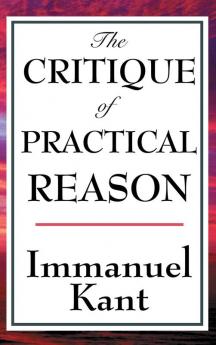
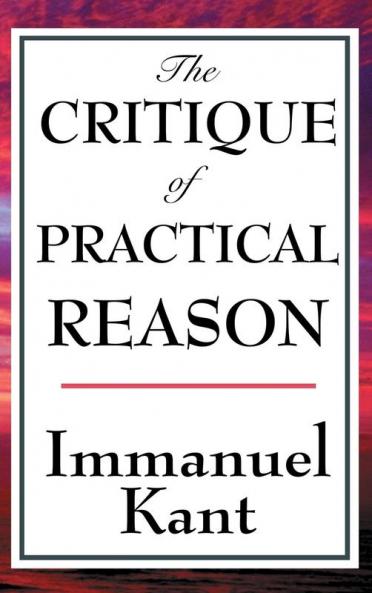
<p><strong>A central work of moral philosophy in which Immanuel Kant establishes the foundations of ethical law through the concept of reason as a source of obligation.</strong> First published in 1788 <em>The Critique of Practical Reason</em> forms the second of Kant's major critical works and advances his account of morality as grounded not in consequence or inclination but in the autonomous operation of rational will.</p><p>Kant's inquiry proceeds from the premise that practical reason is capable of determining action according to universal law. From this he derives the concept of the moral law articulated through the categorical imperative which binds rational agents irrespective of circumstance. The work further develops the relation between freedom duty and the highest good situating ethical life within a framework that unites rational necessity with moral responsibility.</p><p>Distinct from the epistemological concerns of the <em>Critique of Pure Reason</em> this volume addresses the conditions under which action may be considered morally valid establishing a systematic account of obligation that has shaped subsequent philosophical discourse. Its influence extends across modern ethics political philosophy and theology where Kant's formulation of autonomy and law continues to serve as a point of reference and debate.</p><p>This edition presents the text in the classic English translation by Thomas Kingsmill Abbott preserving the precision and structure of Kant's argument for contemporary readers engaged in the study of philosophy.</p>

Piracy-free

Assured Quality

Secure Transactions

Fast Delivery

Sustainably Printed
Details
ISBN 13
9781515436812
Publication Date
-03-04-2018
Pages
-116
Weight
-257 grams
Dimensions
-152x229x11.11 mm
