

English



₹3874
₹4418
12.31% OFF
(All inclusive*)
Paperback
Delivery Options
Please enter pincode to check delivery time.
*COD & Shipping Charges may apply on certain items.
Review final details at checkout.
Looking to place a bulk order? SUBMIT DETAILS
Delivery Options
Please enter pincode to check delivery time.
*COD & Shipping Charges may apply on certain items.
Review final details at checkout.
About The Book
Description
Author
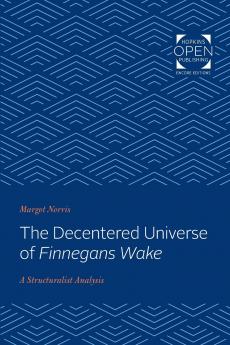
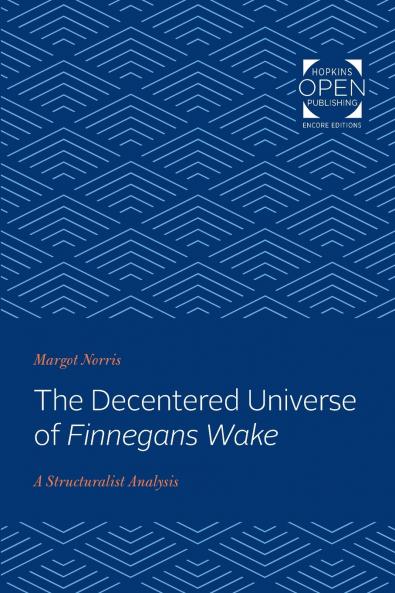
<p>Originally published in 1977. The pioneer critics of<em> Finnegans Wake</em> hailed the work as a radical critique of language and civilization. Resuming their position Margot Norris explains the book&#39;s most intractable uncertainties not as puzzles to be solved by a clever reader but as manifestations of a &quot;chaosmos&quot; a Freudian dream world of sexual transgression and social dissolution of inauthentic being and empty words. Conventional moralities and restraints are under siege in this chaosmos where precisely those desires and forbidden wishes that are barred in waking thought strive to make themselves felt. Norris demonstrates convincingly that the protean characters of <em>Finnegans Wake</em> are the creatures of a dreaming mind. The teleology of their universe is freedom and in the enduring struggle between the individual&#39;s anarchic psyche and the laws that make civilization possible it is only in dream that the psyche is triumphant. It is as <em>dream</em> rather than as novel that Norris reads <em>Finnegans Wake</em>.</p><p>The lexical deviance and semantic density of the book Norris argues are not due to Joyce&#39;s malice mischief or megalomania but are essential and intrinsic to his concern to portray man&#39;s inner state of being. Because meanings are dislocated--hidden in unexpected places multiplied and split given over to ambiguity plurality and uncertainty--the<em> Wake</em> Norris claims represents a decentered universe. Its formal elements of plot character discourse and language are not anchored to any single point of reference; they do not refer back to center. Only by abandoning conventional frames of reference can readers allow the work to disclose its own meanings which are lodged in the differences and similarities of its multitudinous elements.</p><p>Eschewing the close explication of much <em>Wake</em> criticism the author provides a conceptual framework for the work&#39;s large structures with the help of theories and methods borrowed from Freud Heidegger Lacan Levi-Strauss and Derrida. Looking at the work without novelistic expectations of the illusion of some &quot;key&quot; to unlock the mystery Norris explores Joyce&#39;s rationale for committing his last human panorama--a bit sadder than <em>Ulysses</em> in its concern with aging killing and dying--to a form and language belonging to the deconstructive forces of the twentieth century.</p>

Piracy-free

Assured Quality

Secure Transactions

Fast Delivery

Sustainably Printed
Details
ISBN 13
9781421431307
Publication Date
-01-12-2019
Pages
-164
Weight
-231 grams
Dimensions
-152x229x9.63 mm
