

English


Hardback
₹14140
₹14299
1.11% OFF
(All inclusive*)
Delivery Options
Please enter pincode to check delivery time.
*COD & Shipping Charges may apply on certain items.
Review final details at checkout.
Looking to place a bulk order? SUBMIT DETAILS
Delivery Options
Please enter pincode to check delivery time.
*COD & Shipping Charges may apply on certain items.
Review final details at checkout.
About The Book
Description
Author
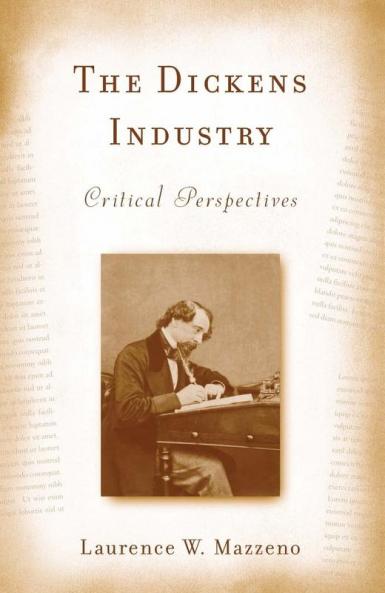
While he was undoubtedly the best-selling author of his day and well loved by readers in succeeding generations Charles Dickens has not always been a favorite with critics. For half a century after his death the writer celebrated for his novels advocating social reform was often ridiculed by those academics who condescended to write about him. Only the faithful band of devotees who called themselves Dickensians kept alive an interest in his work. Then during the Second World War Dickens underwent a kind of resurrection by critics and within two decades he was once again being hailed as the foremost writer of his age a literary genius whose work can stand beside that of Shakespeare and Milton. In the last thirty years Dickens has once again been taken to task this time by a new breed of literary theorists who find fault with his chauvinism and imperialist attitudes. Whether he has been adored or despised however one thing is certain: no other Victorian novelist has generated more critical commentary. Laurence Mazzeno's book traces the history of Dickens's reputation from the earliest reviews by his contemporaries through the work of early twenty-first-century commentators. Chapters concentrate on the way judgments of Dickens changed as new standards for evaluating fiction came to dominate academic discussion. Special attention is paid to important late nineteenth- and twentieth-century studies by George Gissing G. K. Chesterton F. R. Leavis George Orwell Edmund Wilson Humphry House Edgar Johnson J. Hillis Miller Philip Collins Michael Slater and Harry Stone. Mazzeno also places emphasis on the past three decades showing how literary theory has opened up new ways of reading Dickens. What becomes clear is that in attempting to provide fresh insight into Dickens's writings critics often reveal as much about the predilections of their own age as they do about the novelist. Laurence W. Mazzeno is president emeritus of Alvernia College Reading Pennsylvania. He is the author of Tennyson: The Critical Legacy (Camden House 2004) Matthew Arnold: The Critical Legacy (Camden House 1999) Herman Wouk (1994) and annotated bibliographies of eighteenth-century fiction nineteenth-century poetry and nineteenth-century fiction. He is a former editor of Nineteenth-Century Prose.

Piracy-free

Assured Quality

Secure Transactions
Details
ISBN 13
9781571133175
Publication Date
-01-09-2008
Pages
-326
Weight
-531 grams
Dimensions
-152x229x22.23 mm
