


English



Hardback
₹12611
₹14928
15.52% OFF
(All inclusive*)
Delivery Options
Please enter pincode to check delivery time.
*COD & Shipping Charges may apply on certain items.
Review final details at checkout.
Looking to place a bulk order? SUBMIT DETAILS
Delivery Options
Please enter pincode to check delivery time.
*COD & Shipping Charges may apply on certain items.
Review final details at checkout.
About The Book
Description
Author(s)
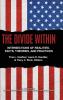
<p> <span style=color: rgba(0 0 0 1)>Globalization modernization and technologization have brought rapid social and economic change while also increasing diversity of democratic societies. Plurality of democracy once viewed as a progressive ideology has been met by the movement of identity politics to the margins of society. Although social movements demanding recognition on the part of groups that were once invisible to mainstream society have brought attention to systemic inequities prejudice and discriminatory policies other groups feeling a loss of status and a sense of displacement have pushed back with counterclaims and protests. These conflicting narratives have fractured society and segmented the populace along narrowly defined identities creating a new era of democracy and isolationism. </span></p><p><span style=color: rgba(0 0 0 1)>Today in the United States we see the troubling effects of increasingly polarized political discourse: amplified gridlock within government the politicization and fragmentation of economic and social life and the suppression of the spread of information across ideological lines. The socio-political climate in America is characterized by skepticism hostility distrust claims of fake news and unwavering opposition. The divide within our nation has shifted the narrative of democracy from promoting the common good to protecting the interests of like-minded factions and the preservation of power and privilege. </span></p><p><span style=color: rgba(0 0 0 1)>In recent decades researchers focused attention on studying the social geographic political and technological polarization in the United States. Trends manifest in myriad ways both in politics and in everyday life and expose the divergence between urban and rural communities. These inquiries also suggest that causes and effects of identity politics and polarization are too complex to be studied within the confines of a single discipline. Its exploration therefore requires participation and collaboration from scholars in many different fields particularly those working in the social sciences. In this edited volume we seek to leverage this research capacity to engage the reader in studies and instruction concerning </span><em style=color: rgba(0 0 0 1)>the divide within </em><span style=color: rgba(0 0 0 1)>and the intersections of realities facts theories and practices in social science education.</span></p>

Piracy-free

Assured Quality

Secure Transactions

Fast Delivery

Sustainably Printed
Details
ISBN 13
9781648023019
Publication Date
-18-11-2020
Pages
-272
Weight
-483 grams
Dimensions
-156x234x15.88 mm
