

English


₹11472
₹13587
15.57% OFF
(All inclusive*)
Hardback
Delivery Options
Please enter pincode to check delivery time.
*COD & Shipping Charges may apply on certain items.
Review final details at checkout.
Looking to place a bulk order? SUBMIT DETAILS
Delivery Options
Please enter pincode to check delivery time.
*COD & Shipping Charges may apply on certain items.
Review final details at checkout.
About The Book
Description
Author(s)
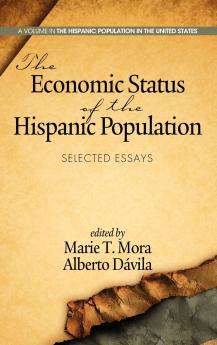
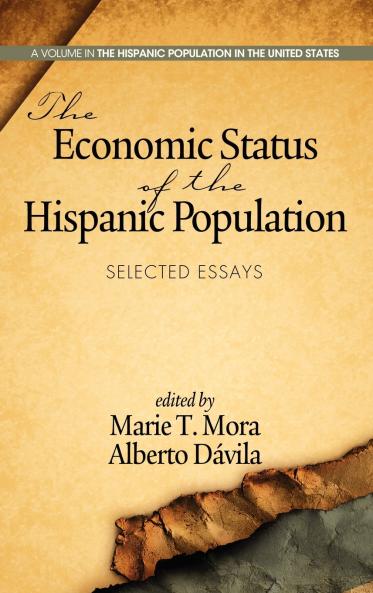
In 2010 Hispanics represented one out of every six people in the U.S. (up from one outof eight in 2000) such that the economic status of this population has becomeincreasingly important for the economic direction of the nation. This volume bringstogether a group of scholars who analyze a variety of socioeconomic issues(particularly those related to education poverty and health) to assess how Hispanicshave been faring relative to other Americans. A common theme across the chapters isthat Hispanics tend to lag behind non-Hispanics with respect to their economicoutcomes. Despite this lag however some of the studies indicate that Hispanics have been making progress in terms ofimproving their relative economic position in recent years. Several of the chapters also discuss policy implications.The intended audience includes social scientists students policymakers and anyone interested in learning more about theeconomic conditions of Hispanic Americans. Many of the authors employed rigorous statistical methods to analyze theeconomic status of Hispanics but the chapters were written to be accessible to a broad audience instead of one comprisedmainly of quantitatively-oriented academics.

Piracy-free

Assured Quality

Secure Transactions

Fast Delivery

Sustainably Printed
Details
ISBN 13
9781623961879
Publication Date
-28-01-2013
Pages
-172
Weight
-346 grams
Dimensions
-156x234x11.11 mm
