

English


Hardback
₹6327
(All inclusive*)
Delivery Options
Please enter pincode to check delivery time.
*COD & Shipping Charges may apply on certain items.
Review final details at checkout.
Looking to place a bulk order? SUBMIT DETAILS
Delivery Options
Please enter pincode to check delivery time.
*COD & Shipping Charges may apply on certain items.
Review final details at checkout.
About The Book
Description
Author(s)
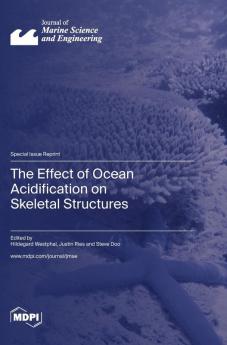
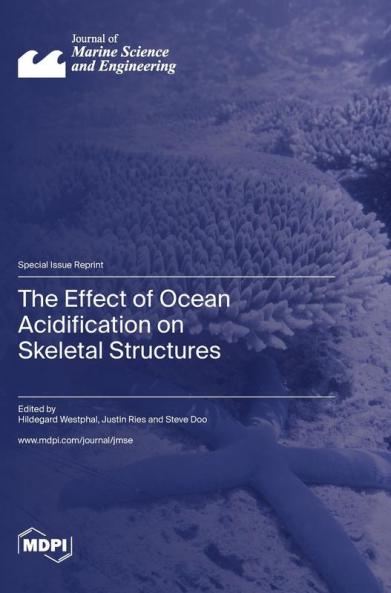
<p>The increasing partial pressure of atmospheric CO2 (pCO2) is reducing surface ocean pH a process known as ocean acidification (OA) This results in a reduced saturation of the seawater with respect to the CaCO3 polymorphs aragonite high-Mg calcite and low-Mg calcite that are involved in the biological formation of calcareous skeletons and shells. The effect of OA on calcium carbonate precipitation and the subsequent dissolution in carbonate depositional systems such as coral reefs is a hotly debated topic. While early studies suggested that certain carbonate-secreting organism groups may be strongly affected by OA or may even become extinct others observed highly variable species-specific responses to OA whereby some taxa are negatively affected some are positively affected and others are unaffected.</p><p>The collection of articles presented in this Special Issue presents ongoing research into the effects of OA on calcareous biomineralization while introducing some new questions and provocative hypotheses. The continued investigation of these concepts should advance our understanding of the mechanisms of biocalcification and improve predictions of how future CO<sub>2</sub>-induced changes in marine and freshwater systems will impact calcifying organisms as well as the ecosystems they comprise in the decades and centuries ahead.</p>

Piracy-free

Assured Quality

Secure Transactions

Fast Delivery

Sustainably Printed
Details
ISBN 13
9783036582825
Publication Date
-24-07-2023
Pages
-156
Weight
-368 grams
Dimensions
-170x244x14.29 mm
