

English


₹2286
(All inclusive*)
Hardback
Delivery Options
Please enter pincode to check delivery time.
*COD & Shipping Charges may apply on certain items.
Review final details at checkout.
Looking to place a bulk order? SUBMIT DETAILS
Delivery Options
Please enter pincode to check delivery time.
*COD & Shipping Charges may apply on certain items.
Review final details at checkout.
About The Book
Description
Author
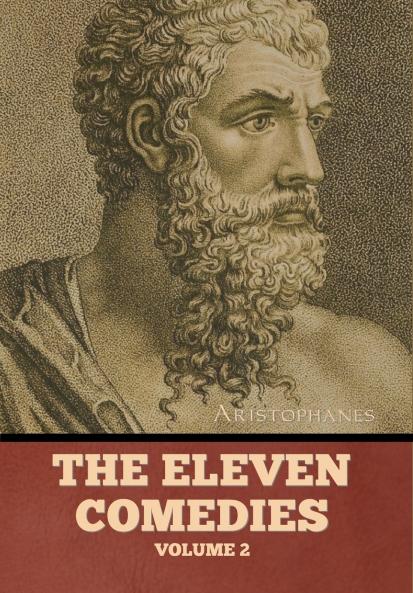
<p>This volume collects six of the eleven surviving plays of Aristophanes:</p><p>The Wasps - a satire on the Athenian jury system featuring an elderly juror obsessed with court proceedings</p><p>The Birds - two Athenians plot a utopian colony in the sky to outsmart the gods and the city</p><p>The Frogs - Dionysus descends to Hades to resurrect a great tragedian and saves Athensʼ culture</p><p>Thesmophoriazusae (Women at the Thesmophoria) - a riotous political farce centering on a women's festival and gender politics</p><p>Ecclesiazusae (The Assemblywomen) - Athenian women infiltrate the all-male Assembly to reshape civic life</p><p>Plutus (Wealth) - a comedy that satirizes greed and economic systems in wartime Athens</p><p></p><p>About the author</p><p>Aristophanes (446 - c. 386 BC) was an Ancient Greek comic playwright from Athens. He wrote in total forty plays of which eleven survive virtually complete today. The majority of his surviving plays belong to the genre of comic drama known as Old Comedy and are considered its most valuable examples. Aristophanes' plays were performed at the religious festivals of Athens mostly the City Dionysia and the Lenaia and several of them won the first prize in their respective competitions.</p><p></p><p>Also known as The Father of Comedy and the Prince of Ancient Comedy Aristophanes wrote plays that often dealt with real-life figures including Euripides and Alcibiades and contemporary events such as the Peloponnesian War. He has been said to recreate the life of ancient Athens more convincingly than any other author. His plays are characterized by preposterous premises explicit language wordplays and political satire. His powers of ridicule were feared and acknowledged by influential contemporaries; Plato singled out Aristophanes' play The Clouds as slander that contributed to the trial and subsequent condemning to death of Socrates although other satirical playwrights had also caricatured the philosopher.</p><p></p><p>Aristophanes' second play The Babylonians (now lost) was denounced by Cleon as a slander against the Athenian polis. It is possible that the case was argued in court but details of the trial are not recorded and Aristophanes caricatured Cleon mercilessly in his subsequent plays especially The Knights the first of many plays that he directed himself. In my opinion he says through that play's Chorus the author-director of comedies has the hardest job of all. (wikipedia.org)</p><p></p>

Piracy-free

Assured Quality

Secure Transactions

Fast Delivery

Sustainably Printed
Details
ISBN 13
9798897732098
Publication Date
-07-08-2025
Pages
-276
Weight
-466 grams
Dimensions
-152x229x20.64 mm
