


This Book is Out of Stock!
English




Hardback
₹16614
(All inclusive*)
Delivery Options
*COD & Shipping Charges may apply on certain items.
Review final details at checkout.
Looking to place a bulk order? SUBMIT DETAILS

Piracy-free

Assured Quality

Secure Transactions
About The Book
Description
Author(s)
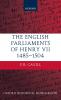
Paul Cavill offers a major reinterpretation of early Tudor constitutional history. In the grand Whig tradition the parliaments of Henry VII were a disappointing retreat from the onward march towards parliamentary democracy. The king was at best indifferent and at worst hostile to parliament; its meetings were cowed and quiescent subservient to the royal will. Yet little research has tested these assumptions. Drawing on extensive archival research Cavill challenges existing accounts and revises our understanding of the period. Neither to the king nor to his subjects did parliament appear to be a waning institution fading before the waxing power of the crown. For a ruler in Henry''s vulnerable position parliament helped to restore royal authority by securing the good governance that legitimated his regime. For his subjects parliament served as a medium through which to communicate with the government and to shape--and on occasion criticize--its policies. Because of the demands parliament made its impact was felt throughout the kingdom among ordinary people as well as among the elite. Cooperation between subjects and the crown rather than conflict characterized these parliaments. While for many scholars parliament did not truly come of age until the 1530s when-freed from its medieval shackles-the modern institution came to embody the sovereign nation state in this study Henry''s reign emerges as a constitutionally innovative period. Ideas of parliamentary sovereignty were already beginning to be articulated. It was here that the foundations of the Tudor revolution in government were being laid.
Piracy-free
Assured Quality
Secure Transactions
*COD & Shipping Charges may apply on certain items.
Review final details at checkout.
₹16614
Out Of Stock
All inclusive*
Details
ISBN 13
9780199573837
Publication Date
-13-08-2009
Pages
-314
Weight
-448 grams
Dimensions
-140x216x22.23 mm
