


English



Hardback
₹2880
(All inclusive*)
Delivery Options
Please enter pincode to check delivery time.
*COD & Shipping Charges may apply on certain items.
Review final details at checkout.
Looking to place a bulk order? SUBMIT DETAILS

Piracy-free

Assured Quality

Secure Transactions
About The Book
Description
Author
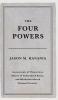
<p><span style=color: rgba(0 0 0 1)>What is power? </span></p><p><br></p><p><span style=color: rgba(0 0 0 1)>How does it become centralized or decentralized? </span></p><p><br></p><p><span style=color: rgba(0 0 0 1)>These questions are at the heart of understanding how governments work. </span></p><p><br></p><p><span style=color: rgba(0 0 0 1)>Humankind has barely scratched the surface of what it takes to provide for democracy equality and reduced social risk.&nbsp;</span></p><p><br></p><p><span style=color: rgba(0 0 0 1)>History has taught us that centralizing power in one group member creates maximum power inequality and typically results in abuse of power. </span></p><p><br></p><p><span style=color: rgba(0 0 0 1)>Whether done consciously or unconsciously that group member will inevitably make decisions that serve personal rather than public interests. </span></p><p><br></p><p><span style=color: rgba(0 0 0 1)>It's human nature.</span></p><p><br></p><p><span style=color: rgba(0 0 0 1)>In&nbsp;</span><em style=color: rgba(0 0 0 1)>The Four Powers</em><span style=color: rgba(0 0 0 1)> Hanania provides a fast-paced historical assessment of centralized power. </span></p><p><br></p><p><span style=color: rgba(0 0 0 1)>From World War I to crypto Hanania explains the emerging trend toward technodemocracy: a decentralized system of governance whereby power-centralized institutions (such as churches banks political parties campaign donors Amazon and the CIA) become obsolete.</span></p><p><br></p><p><strong style=color: rgba(0 0 0 1)>ABOUT THE AUTHOR</strong></p><p><br></p><p><span style=color: rgba(0 0 0 1)>From the author of&nbsp;</span><em style=color: rgba(0 0 0 1)>Architecture of a Technodemocracy</em><span style=color: rgba(0 0 0 1)>&nbsp;(2018) an Amazon bestseller for both U.S. politics and sociology comes this eye-opening analysis of the human power structure. </span></p><p><br></p><p><span style=color: rgba(0 0 0 1)>Jason M. Hanania is an attorney an engineer and a former U.S. government employee.</span></p><p><br></p><p><strong style=color: rgba(15 17 17 1)>INTRODUCTION</strong></p><p><br></p><p><strong style=color: rgba(15 17 17 1)>An Equation for Power</strong></p><p><br></p><p><span style=color: rgba(15 17 17 1)>In 2016 I set out to write the book&nbsp;</span><em style=color: rgba(15 17 17 1)>Architecture of a Technodemocracy</em><span style=color: rgba(15 17 17 1)>.</span></p><p><br></p><p>It documents a system for ending political party systems using technology and democracy.</p><p><br></p><p>Before authoring that book I searched far and wide for an institutional definition of democracy but found none.</p><p><br></p><p>If you asked ten social scientists for a simple definition of democracy you would get ten different responses.</p><p><br></p><p>As an engineer I found this frustrating.</p><p><br></p><p>I wanted a more technical understanding of democracy a mathematical framework to build on.</p><p><br></p><p>The same way physical science provides equations for motion (such as force equals mass times acceleration or&nbsp;<em style=color: rgba(15 17 17 1)>F = ma</em><span style=color: rgba(15 17 17 1)>) I wanted a social science equation for democracy...</span></p>
Piracy-free
Assured Quality
Secure Transactions
Delivery Options
Please enter pincode to check delivery time.
*COD & Shipping Charges may apply on certain items.
Review final details at checkout.
Details
ISBN 13
9781732119765
Publication Date
-04-07-2023
Pages
-380
Weight
-445 grams
Dimensions
-127x203x30.16 mm
