

English



Hardback
₹11912
₹15789
24.56% OFF
(All inclusive*)
Delivery Options
Please enter pincode to check delivery time.
*COD & Shipping Charges may apply on certain items.
Review final details at checkout.
Looking to place a bulk order? SUBMIT DETAILS
Delivery Options
Please enter pincode to check delivery time.
*COD & Shipping Charges may apply on certain items.
Review final details at checkout.
About The Book
Description
Author
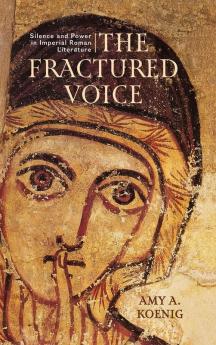
Imperial Rome privileged the elite male citizen as one of sound mind and body superior in all ways to women noncitizens and nonhumans. One of the markers of his superiority was the power of his voice both literal (in terms of oratory and the legal capacity to represent himself and others) and metaphoric as in the political power of having a voice in the public sphere. Muteness in ancient Roman society has thus long been understood as a deficiency both physically and socially.<br> <br> In this volume Amy Koenig deftly confronts the trope of muteness in Imperial Roman literature arguing that this understanding of silence is incomplete. By unpacking the motif of voicelessness across a wide range of written sources she shows that the Roman perception of silence was more complicated than a simple binary and that elite male authors used muted or voiceless characters to interrogate the concept of voicelessness in ways that would be taboo in other contexts. Paradoxically Koenig illustrates that silence could in fact be freeing-that the loss of voice permits an untethering from other social norms and expectations thus allowing a freedom of expression denied to many of the voiced.

Piracy-free

Assured Quality

Secure Transactions

Fast Delivery

Sustainably Printed
Details
ISBN 13
9780299345303
Publication Date
-09-01-2024
Pages
-228
Weight
-403 grams
Dimensions
-152x229x14.29 mm
