

English


Hardback
₹3810
(All inclusive*)
Delivery Options
Please enter pincode to check delivery time.
*COD & Shipping Charges may apply on certain items.
Review final details at checkout.
Looking to place a bulk order? SUBMIT DETAILS

Piracy-free

Assured Quality

Secure Transactions
About The Book
Description
Author
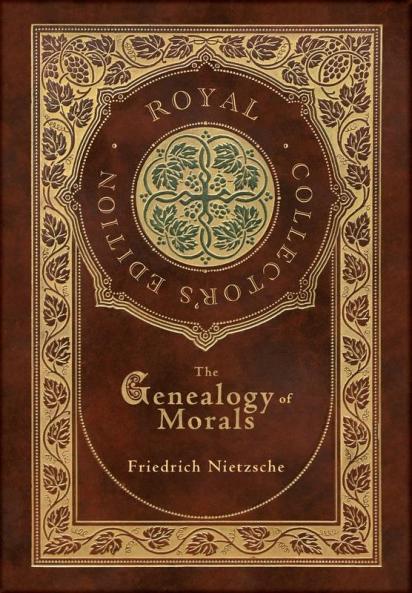
<p><strong>The three interrelated treatises trace episodes in the evolution of moral concepts with a view to confronting moral prejudices specifically those of Christianity and Judaism. </strong>In the first treatise Nietzsche demonstrates that the two pairs of opposites good/evil and good/bad have very different origins and that the word good itself came to represent two opposed meanings. The second treatise examines what we call the conscience is the end product of a long and painful socio-historical process that began with the need to create a memory in the human animal.&nbsp;In the third treatise Nietzsche asks the question What do ascetic ideals mean?</p><p><br></p><p>Some Nietzsche scholars consider <em>The Genealogy of Morals</em>&nbsp;to be a work of sustained brilliance and power as well as his masterpiece. Since its publication it has influenced many authors and philosophers. Some of the contents and many symbols and metaphors portrayed in <em>The Genealogy of Morals</em> together with its tripartite structure seem to be based on and influenced by Heinrich Heine's <em>On the History of Religion and Philosophy in Germany</em>.</p><p><br></p><p>This case laminate collector's edition includes a Victorian-inspired dust jacket.&nbsp;</p>
Piracy-free
Assured Quality
Secure Transactions
Delivery Options
Please enter pincode to check delivery time.
*COD & Shipping Charges may apply on certain items.
Review final details at checkout.
Details
ISBN 13
9781774769102
Publication Date
-18-11-2022
Pages
-132
Weight
-278 grams
Dimensions
-152x229x11.11 mm
