



This Book is Out of Stock!
English





₹26275
(All inclusive*)
Hardback
Delivery Options
*COD & Shipping Charges may apply on certain items.
Review final details at checkout.
Looking to place a bulk order? SUBMIT DETAILS
*COD & Shipping Charges may apply on certain items.
Review final details at checkout.
₹26275
Out Of Stock
All inclusive*
About The Book
Description
Author
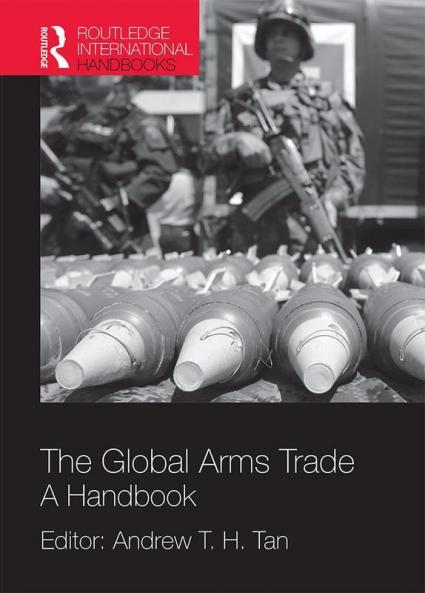
<p><em>The Global Arms Trade</em> is written by a team of security experts drawn from around the world, analysing a phenomenon which has continued to flourish despite the end of the Cold War and the preoccupation with global terrorism after 11 September 2001. It provides a clear description and analysis of the demand for, and supply of, modern weapons systems, and assesses key issues of concern. The comprehensive and in-depth treatment of the subject establishes this volume as a standard reference on the subject. </p><p>It is divided sections which examine the demand for arms, the supply of arms and the key issues in the global arms trade. </p><ul> <b> </b><p> </p> <li>Part 1: Introduction. Develops the general conceptual framework by providing and overview of the global arms trade</li> <b> </b><p> </p> <li>Part 2: Arms Modernization after the Cold War. Focuses on the demand for arms, in terms of defence spending, procurement and modernization </li> <b> </b><p> </p> <li>Part 3: The Arms Industry after the Cold War. Examines the supply of arms, and the evolution, development of the arms industry, as well as its problems and prospects</li> <b> </b><p> </p> <li>Part 4: Key Issues in the Global Arms Trade. Discusses the major issues arising from the arms trade phenomenon</li> </ul><p>The global arms trade is a major area of academic and governmental enquiry. With chapters looking at World regions such as Asia, Europe and the Middle East, as well as individual countries, this book will be of particular use and interest to scholars of international relations and security studies, policy analysts and defence professionals. </p> <p><strong>Section 1: Introduction</strong> 1. An Overview of Global Patterns <em>Andrew Tan</em> 2. Arms Spending and Procurement in Southeast Asia <em>Andrew Tan</em> 3. Arms Modernization in Asia <em>Desmond Ball</em> <strong>Section 2: Arms Modernization After the Cold War</strong> 4. China’s Arms Modernization <em>You Ji</em> 5. India’s Arms Build-up <em>Harsh V Pant</em> 6. Japan’s Arms Procurement after the Cold War <em>Brad Williams</em> 7. Arming North Korea <em>Yong-Sup Han</em> 8. Arms Modernization in the Middle East <em>Riad Attar</em> 9. Israel’s Defence Spending and Procurement after Camp <em>David Efraim Inbar</em> 10. Iran’s Defence Spending and Arms Procurement <em>Efraim Kam</em> 11. US Arms Procurement after the End of the Cold War <em>David Gold</em> 12. Post Cold War Defence Procurement in Europe <em>Andrew James</em> 13. Defence Spending and Procurement in Post-Communist Russia <em>Alexander Pikayev</em> 14. Arms Modernization in Latin America <em>Mark Bromley</em> and <em>Inigo Guevara</em> 15. Arms Proliferation in Africa <em>Martin R. Rupiya</em> <strong>Section 3: The Arms Industry After the Cold War</strong> 16. The Global Arms Trade after the Cold War <em>Siemon T. Wezeman</em> 17. The Globalization of the Arms Industry <em>Richard Bitzinger</em> 18. Defence Restructuring and Consolidation in Europe <em>Michael Brzoska</em> 19. The US Defence Industry After the Cold War <em>Elisabeth Skons</em> 20. The UK Defence Industry in an Age of Globalization <em>Samuel Perlo-Freeman</em> 21. Israel’s Defence Industry <em>Yaacov Lifschitz</em> <strong>Section 4: Key Issues in the Global Arms Trade</strong> 22. The Military Industrial Complex <em>J. Paul Dunne</em> 23. Defence Spending and Development/Modernization <em>J. Paul Dunne</em> 24. Post-Cold War Control of Conventional Arms <em>Sibylle Bauer</em> 25. Insurgencies and their Impact on Arms Procurement <em>Isaiah Wilson</em> 26. The Privatization of Force <em>Malcolm Patterson</em> 27. Future War–The Shape of Arms to Come <em>Malcolm Davis</em> <strong>Section 4: Conclusions</strong> 28. Conclusions <em>Andrew Tan</em></p>

Piracy-free

Assured Quality

Secure Transactions

Fast Delivery

Sustainably Printed
Details
ISBN 13
9781857434972
Publication Date
-21-12-2009
Pages
-414
Weight
-770 grams
Dimensions
-174x246x23.27 mm
Imprint
-Routledge
