


This Book is Out of Stock!
English


Paperback
₹1916
(All inclusive*)
Delivery Options
*COD & Shipping Charges may apply on certain items.
Review final details at checkout.
Looking to place a bulk order? SUBMIT DETAILS
*COD & Shipping Charges may apply on certain items.
Review final details at checkout.
₹1916
Out Of Stock
All inclusive*
About The Book
Description
Author
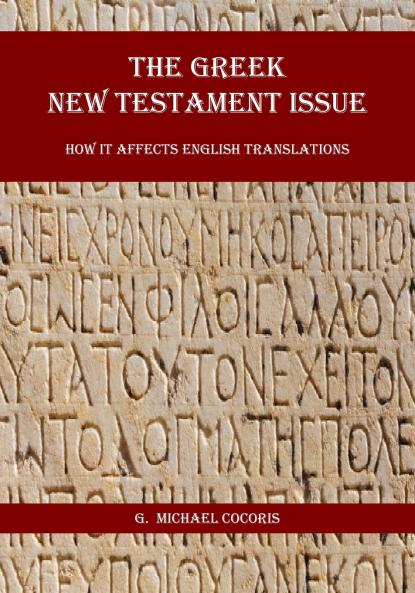
<p>There are thousands of manuscripts (handwritten copies) of the Greek New Testament. 90% or more of those manuscripts are in virtual agreement. In 1516 Erasmus chose a handful of manuscripts to produce the first Greek text (printed copy). He and others revised that text several times. It was the basis of the King James Version (1611) and later the New King James Version. In 1633 it was called the Textus Receptus a Latin phrase meaning the received text.</p><p>In the 19<sup>th</sup> century two earlier manuscripts were discovered. The thousands of manuscripts of the New Testament that were known before that were dated from the fifth century and later. Vaticanus and Sinaiticus were from the fourth century and they had many differences from the vast majority of manuscripts. Because they were closer to the time when the New Testament was written it was decided that they were more accurate reflections of the New Testament. All modern translations are based on those two manuscripts including the ASV RSV NASB NIV ESV etc.</p><p>To complicate matters in the latter part of the 20<sup>th</sup> century the vast majority of manuscripts were edited to produce three versions of the traditional text. These are named the Majority Text the Byzantine Text and Family 35.</p><p>In the <em>Greek Text Issue</em> Michael Cocoris simplifies this complex subject demonstrates the major differences between the five versions of the Greek text and explains how this affects the major modern English translations. Regardless of your point of view this material will provide information to help you understand the complex issue of the Greek text of the New Testament and which English translation should be used for serious Bible study.</p>

Piracy-free

Assured Quality

Secure Transactions

Fast Delivery

Sustainably Printed
Details
ISBN 13
9781948474290
Publication Date
-01-01-2025
Pages
-338
Weight
-597 grams
Dimensions
-178x254x16.79 mm
