

English


₹1544
₹1555
0.71% OFF
(All inclusive*)
Paperback
Delivery Options
Please enter pincode to check delivery time.
*COD & Shipping Charges may apply on certain items.
Review final details at checkout.
Looking to place a bulk order? SUBMIT DETAILS
Delivery Options
Please enter pincode to check delivery time.
*COD & Shipping Charges may apply on certain items.
Review final details at checkout.
About The Book
Description
Author(s)
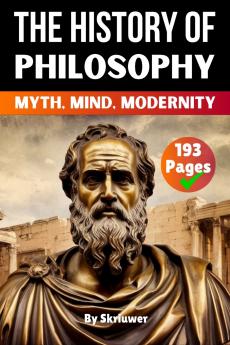
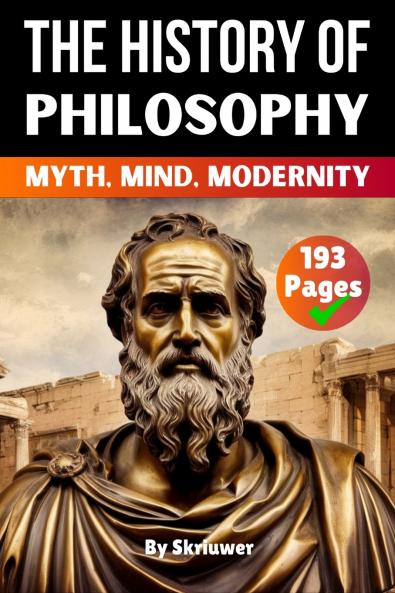
<p><strong>Unlock the Timeless Quest for Wisdom: A Journey Through Philosophy's Greatest Minds</strong></p><p>The History of Philosophy invites readers to embark on an intellectual odyssey that spans millennia evoking the profound wonder of humanity's search for truth amid life's deepest questions. From ancient mythological roots in Mesopotamia and Egypt to 19th-century debates on idealism and empiricism this book captures the emotional intensity of thinkers challenging authority exploring existence and shaping societies reminding us of the high stakes in pursuing knowledge that has transformed our world.</p><p></p><p>It opens with philosophy's origins tracing how early civilizations' myths and religious stories transitioned from oral traditions to reason-based inquiry laying groundwork for systematic thought. The pre-Socratic era emerges in Ionia where natural philosophers like Thales sought fundamental principles debating change and reality's nature.</p><p></p><p>Socrates's life unfolds with his method of questioning ethical living and self-examination culminating in his trial's impact on Athens. Plato's theory of eternal Forms and Academy founding introduce dialogue as a tool influencing generations of seekers.</p><p></p><p>Aristotle's Lyceum brings systematic logic science and ethics with the Golden Mean guiding virtuous paths. The Hellenistic age contrasts Stoics' rational control Epicureans' pursuit of tranquility and Skeptics' challenge to certainty.</p><p></p><p>Roman adaptations by Cicero and Seneca blend Greek schools with practical values preserving ideas for posterity. Neo-Platonism's spiritual ascent through Plotinus bridges antiquity to medieval fusion of Christian doctrine with classics.</p><p></p><p>Early medieval developments preserve knowledge in monasteries debating faith and reason. The Islamic Golden Age transmits Greek thought via translators and philosophers like Avicenna bridging to the Latin West.</p><p></p><p>Scholasticism synthesizes Aristotle with theology as Aquinas's Five Ways exemplify university debates. Renaissance humanism rediscovers classics emphasizing individual potential and shifting from religious to secular focus.</p><p></p><p>Renaissance impacts reshape art science and reason while Reformation tensions question authority fostering personal interpretation. Scientific developments pave Enlightenment roads challenging medieval views with observation.</p><p></p><p>Enlightenment philosophers champion reason liberty and progress through social contracts and reform quests. Late Enlightenment shifts toward Romanticism critiquing rationalism for emotion and imagination.</p><p></p><p>Early 19th-century idealism prioritizes mind as reality influencing metaphysics. Mid-century responses to industrialization refine empiricism utilitarianism and pragmatism for social change.</p><p></p><p>The conclusion reflects historical shifts' legacy summing major schools and their enduring influence into the 20th century. Comparable to Bertrand Russell's A History of Western Philosophy which offers witty insights into thinkers' lives and ideas this volume aligns with 2025 trends in accessible intellectual histories emphasizing personal growth and ethical reflection. Its broad marketability appeals to students lifelong learners and philosophy newcomers positioning it as a steady seller for bookstores in philosophy and self-improvement sections. By weaving emotional stakes like the pursuit of meaning amid uncertainty and innovation through debate it connects readers to philosophy's enduring spirit inspiring reflection on how ancient questions resonate in today's complex world.</p>

Piracy-free

Assured Quality

Secure Transactions

Fast Delivery

Sustainably Printed
Details
ISBN 13
9783565084470
Publication Date
-11-11-2025
Pages
-194
Weight
-271 grams
Dimensions
-152x229x10.45 mm
