


English


₹2110
(All inclusive*)
Hardback
Delivery Options
Please enter pincode to check delivery time.
*COD & Shipping Charges may apply on certain items.
Review final details at checkout.
Looking to place a bulk order? SUBMIT DETAILS
Delivery Options
Please enter pincode to check delivery time.
*COD & Shipping Charges may apply on certain items.
Review final details at checkout.
About The Book
Description
Author
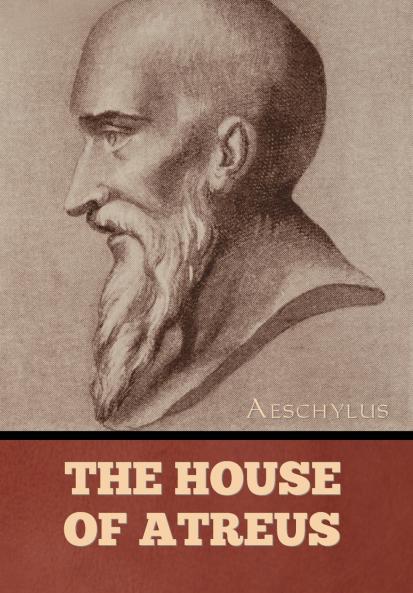
<p>The House of Atreus refers to the tragic saga of a royal family cursed with a legacy of murder revenge and divine punishment. This mythic cycle is most famously dramatized in Aeschylus' trilogy The Oresteia which consists of three plays:</p><p></p><p>1. Agamemnon</p><p>Summary: King Agamemnon returns to Argos after winning the Trojan War. His wife Clytemnestra murders him in revenge for sacrificing their daughter Iphigenia to gain favorable winds for his fleet. Clytemnestra is aided by her lover Aegisthus who also seeks revenge-his father was killed by Agamemnon's father Atreus.</p><p>Themes: Betrayal vengeance and the burden of the ancestral curse.</p><p>2. The Libation Bearers (Choephoroi)</p><p>Summary: Agamemnon's son Orestes returns from exile and is urged by the gods to avenge his father's death. With his sister Electra he kills Clytemnestra and Aegisthus. However this matricide brings on the wrath of the Furies (Erinyes)-ancient spirits of vengeance.</p><p>Themes: Justice vs. vengeance divine law vs. human morality guilt and madness.</p><p>The Eumenides</p><p>Summary: Orestes flees to Athens seeking purification. The goddess Athena intervenes setting up the first court of law to try Orestes. The Furies demand justice for matricide but Orestes is acquitted by the court and the Furies are transformed into the Eumenides protectors of justice.</p><p>Themes: Transition from personal revenge to civil justice the evolution of society and law reconciliation of old and new orders.</p><p></p><p>About The author</p><p>Aeschylus (525/524 - c. 456/455 BC) was an ancient Greek tragedian often described as the father of tragedy. Academic knowledge of the genre begins with his work and understanding of earlier Greek tragedy is largely based on inferences made from reading his surviving plays. According to Aristotle he expanded the number of characters in the theatre and allowed conflict among them. Formerly characters interacted only with the chorus.</p><p></p><p>Only seven of Aeschylus's estimated 70 to 90 plays have survived in complete form. There is a long-standing debate regarding the authorship of one of them Prometheus Bound with some scholars arguing that it may be the work of his son Euphorion. Fragments from other plays have survived in quotations and more continue to be discovered on Egyptian papyri. These fragments often give further insights into Aeschylus' work. He was likely the first dramatist to present plays as a trilogy. His Oresteia is the only extant ancient example. At least one of his plays was influenced by the Persians' second invasion of Greece (480-479 BC). This work The Persians is one of very few classical Greek tragedies concerned with contemporary events and the only one extant. The significance of the war with Persia was so great to Aeschylus and the Greeks that his epitaph commemorates his participation in the Greek victory at Marathon while making no mention of his success as a playwright. (wikipedia.org)</p><p></p>

Piracy-free

Assured Quality

Secure Transactions

Fast Delivery

Sustainably Printed
Details
ISBN 13
9798897732050
Publication Date
-05-08-2025
Pages
-172
Weight
-330 grams
Dimensions
-152x229x14.29 mm
