


English



Paperback
₹400
₹599
33.22% OFF
(All inclusive*)
Delivery Options
Please enter pincode to check delivery time.
*COD & Shipping Charges may apply on certain items.
Review final details at checkout.
Looking to place a bulk order? SUBMIT DETAILS
Delivery Options
Please enter pincode to check delivery time.
*COD & Shipping Charges may apply on certain items.
Review final details at checkout.
About The Book
Description
Author(s)
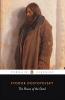
<b>Fyodor Dostoyevsky's harrowing semi-autobiographical novel about the internal transformation of a man serving ten years in a remote Siberian prison</b> <p/><b>In order to understand the significance of the style and structure of the book it is necessary to bear in mind that it was the result of a terrible mental spiritual and physical ordeal. . . . The point about the novel however is that it charts the reawakening of a man <i>without a personality</i>.--from the Introduction </b> <p/><i>Here was the house of the living dead and a life like none other upon earth. </i> <p/>In January 1850 Fyodor Dostoyevsky was sent to a remote Siberian prison camp for his part in a political conspiracy. The four years he spent there startlingly re-created in <i>The House of the Dead</i> were the most agonizing of his life. <p/>In this fictionalized account he recounts his soul-destroying incarceration through the cool detached tones of his narrator Aleksandr Petrovich Goryanchikov: the daily battle for survival the wooden plank beds the cabbage soup swimming with cockroaches his strange 'family' of boastful ugly cruel convicts. <p/>Yet <i>The House of the Dead</i> is far more than a work of documentary realism: it is also a powerful novel of redemption describing one man's spiritual and moral death and the miracle of his gradual reawakening. <p/><b>This Penguin Classics edition includes notes and an introduction by David McDuff discussing the circumstances of Dostoyevsky's imprisonment the origins of the novel in his prison writings and the character of Aleksandr Petrovich.</b>

Piracy-free

Assured Quality

Secure Transactions

Fast Delivery

Sustainably Printed
Details
ISBN 13
9780140444568
Publication Date
-07-01-1986
Pages
-368
Weight
-301 grams
Dimensions
-138x216x22.13 mm
