

English


Paperback
₹8733
₹9193
5% OFF
(All inclusive*)
Delivery Options
Please enter pincode to check delivery time.
*COD & Shipping Charges may apply on certain items.
Review final details at checkout.
Looking to place a bulk order? SUBMIT DETAILS

Piracy-free

Assured Quality

Secure Transactions
About The Book
Description
Author
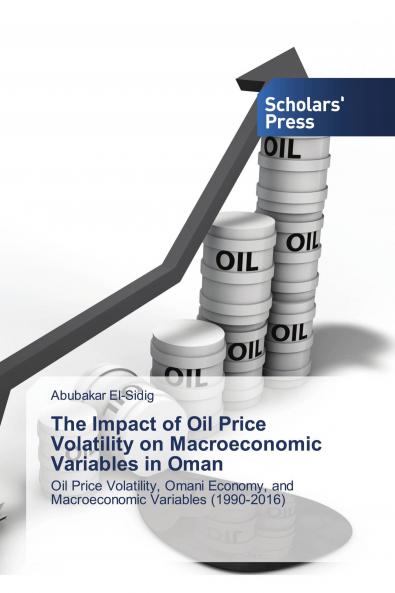
Oman is worryingly reliant on its dwindling oil resources which produce 84% of government revenue. In 2016 low international oil prices made the Omani budget deficit US$11.5 billion or roughly 19% of GDP yet the budget deficit was contracted to 13% of GDP in 2017 as the Sultanate cut its subsidies. This State has scarce foreign assets and is issuing debt to shelter its deficit. Consistent with the above this thesis aspires to ascertain the impact of such volatility on macroeconomic variables – “Government expenditure inflation (CPI) rate aggregate investment expenditure money supply (M2) employment rate and aggregate household consumption expenditure”- in the Sultanate of Oman scoping from 1990 to 2016.The thesis employs the Autoregressive Distributed Lag (ARDL) model that succeeded in the methodology suggested by Pesaran and Shin (1999). Pesaran Shin and Smith (2001) have developed a version of the ARDL model as a substitute co-integration method called the error correction version. This method’s employment is essential to test the presence of long-term correlations between the variables of interest.
Piracy-free
Assured Quality
Secure Transactions
Delivery Options
Please enter pincode to check delivery time.
*COD & Shipping Charges may apply on certain items.
Review final details at checkout.
Details
ISBN 13
9786205521465
Publication Date
-28-03-2023
Pages
-272
Weight
-373 grams
Dimensions
-150x220x14.57 mm
