

English


Hardback
₹12815
₹14868
13.81% OFF
(All inclusive*)
Delivery Options
Please enter pincode to check delivery time.
*COD & Shipping Charges may apply on certain items.
Review final details at checkout.
Looking to place a bulk order? SUBMIT DETAILS

Piracy-free

Assured Quality

Secure Transactions
About The Book
Description
Author
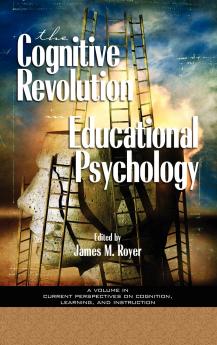
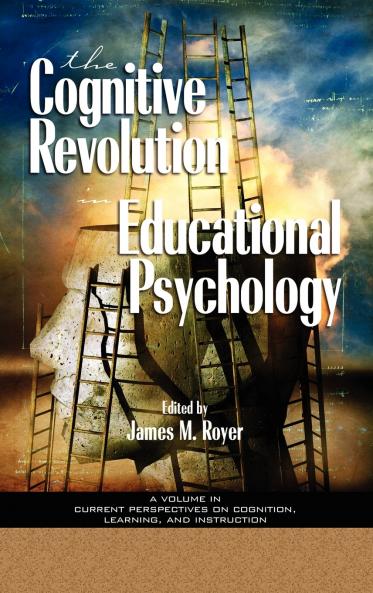
The book provides a description of the cognitive revolution which began in the 1950s and reached full fruition in the late 1960s. The term cognitive revolution began to be used to take advantage of an analysis of scientific revolutions in general that was developed by Thomas Kuhn. The next section describes how some aspects of the cognitive revolution seem to fit Kuhns analytic framework and others do not. Following this analysis the book turns to examining the impact of the cognitive revolution in educational psychology as illustrated by the remaining chapters in the book.CONTENTS: The Cognitive Revolution in Educational Psychology James M. Royer. The Cognitive Revolution in Scientific Psychology: Epistemological Roots and Impact on Reading Research Ralph E. Reynolds and Gale M. Sinatra. From Behaviorism to Situated Cognition: An Examination of Learning and Instruction in the Second Half of the 20 Century Through the Research and Writing of Richard C. Anderson James M. Royer. May You Teach in Interesting Times! Donald J. Cunningham. Conceptual Understanding Versus Computational Skill: How Cognitive Science Helps Resolve the Great Debate of Mathematics Education Richard E. Mayer. The Impact of the Cognitive Revolution on Science Learning and Teaching Eugenia Etkina Jose P. Mestre and Angela ODonnell. The Self and Academic Motivation: Theory and Research after the Cognitive Revolution Frank Pajares and Dale Schunk. The Cognitive Revolution and Instructional Design Marcy P. Driscoll and Kerry J. Burner. Research in Instructional Technology Jennifer Wiley Christopher A. Sanchez & Tom Moher. Transfer and Problem Solving: A Psychological Integration of Models Metaphors and Methods Gary D. Phye. Social Perspectives on the Cognitive Revolution and Education: From Alien Beings to Robust Trustees Peter Freebody.
Piracy-free
Assured Quality
Secure Transactions
Delivery Options
Please enter pincode to check delivery time.
*COD & Shipping Charges may apply on certain items.
Review final details at checkout.
Details
ISBN 13
9781593111632
Publication Date
-01-04-2005
Pages
-332
Weight
-565 grams
Dimensions
-156x234x19.05 mm
