




This Book is Out of Stock!
English




Hardback
₹15573
₹18960
17.86% OFF
(All inclusive*)
Delivery Options
*COD & Shipping Charges may apply on certain items.
Review final details at checkout.
Looking to place a bulk order? SUBMIT DETAILS

Piracy-free

Assured Quality

Secure Transactions
About The Book
Description
Author
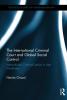
<p>The International Criminal Court was established in 2002 to prosecute war crimes crimes against humanity and genocide. At its genesis the ICC was expected to help prevent atrocities from arising or escalating by ending the impunity of leaders and administering punishment for the commission of international crimes. More than a decade later the ICC’s ability to achieve these broad aims has been questioned as the ICC has reached only two guilty verdicts. In addition some of the world’s major powers including the United States Russia and China are not members of the ICC. These issues underscore a gap between the ideals of prevention and deterrence and the reality of the ICC’s functioning.</p><p>This book explores the gaps schisms and contradictions that are increasingly defining the International Criminal Court moving beyond existing legal international relations and political accounts of the ICC to analyse the Court from a criminological standpoint. By exploring the way different actors engage with the ICC and viewing the Court through the framework of late modernity the book considers how gaps between rhetoric and reality arise in the work of the ICC. Contrary to much existing research the book examines how such gaps and tensions can be productive as they enable the Court to navigate a complex international environment driven by geopolitics. </p><p>The International Criminal Court and Global Social Control will be of interest to academics researchers and advanced practitioners in international law international relations criminology and political science. It will also be of use in upper-level undergraduate and postgraduate courses related to international criminal justice and globalization.</p>
Piracy-free
Assured Quality
Secure Transactions
*COD & Shipping Charges may apply on certain items.
Review final details at checkout.
₹15573
₹18960
17% OFF
Hardback
Out Of Stock
All inclusive*
Details
ISBN 13
9781138820906
Publication Date
-26-11-2015
Pages
-174
Weight
-349 grams
Dimensions
-156x234x10.94 mm
