

English


Paperback
₹5355
(All inclusive*)
Delivery Options
Please enter pincode to check delivery time.
*COD & Shipping Charges may apply on certain items.
Review final details at checkout.
Looking to place a bulk order? SUBMIT DETAILS

Piracy-free

Assured Quality

Secure Transactions
About The Book
Description
Author
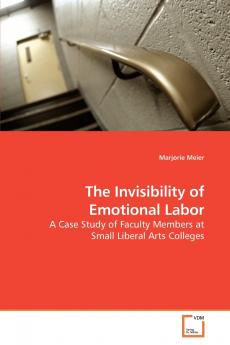
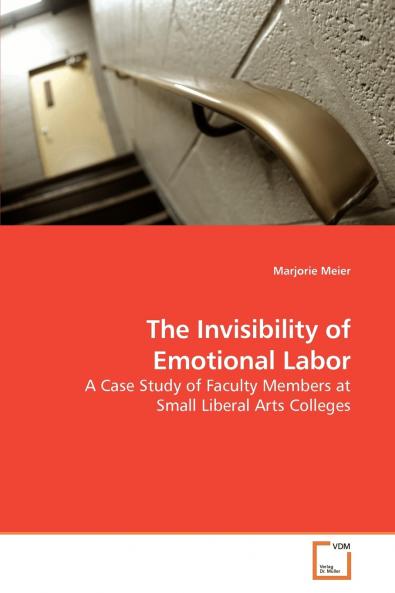
The focus of this study is on the invisibility of emotional labor for faculty members in private liberal arts colleges. Here Hochschild's (1983) position is that the condition for emotional labor interactions has three requirements first face-to- face or voice-to-voice contact with a client or customer second the employee is required to produce an emotional state in another person (client or customer) and third that these jobs allow the employer to exercise a degree of control over the emotional activities of employees through training and supervision. In addition this study uses the social exchange framework to determine if emotional labor is exchanged for Christine Maslach's (1976) burnout characteristics of depersonalization exhaustion and or self-accomplishment.
Piracy-free
Assured Quality
Secure Transactions
Delivery Options
Please enter pincode to check delivery time.
*COD & Shipping Charges may apply on certain items.
Review final details at checkout.
Details
ISBN 13
9783639195392
Publication Date
-08-10-2009
Pages
-100
Weight
-148 grams
Dimensions
-150x220x5.74 mm
