


This Book is Out of Stock!
English


Hardback
₹5562
₹6375
12.75% OFF
(All inclusive*)
Delivery Options
*COD & Shipping Charges may apply on certain items.
Review final details at checkout.
Looking to place a bulk order? SUBMIT DETAILS

Piracy-free

Assured Quality

Secure Transactions
About The Book
Description
Author(s)
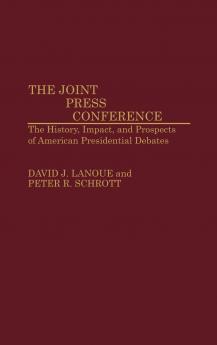
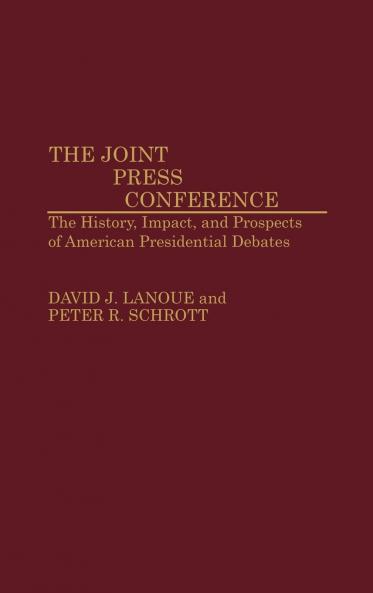
Despite the brouhaha accorded presidential debates by the media which regards these confrontations as events of significant magnitude social scientists have been less convinced of their impact and importance. They tend to assert that such performances have had little effect on voting behavior and tend to merely reinforce viewers'' already held biases. In The Joint Press Conference David J. Lanoue and Peter R. Schrott focus on the impact of presidential debates on voters and attempt to reconcile the disparate views of media and social science. Confronting the positive conventional wisdom of the former and the largely negative empirical data of the latter they arrive at some surprising conclusions. Research that emerged after the 1980 1984 and 1988 debates strongly suggested that debates do matter and that their impact may be substantial. In addition not only have the direct effects of debates on voting behavior come under reconsideration but also their importance in changing and reinforcing viewers'' candidate images and issue positions. This five-chapter study ties together the research of social scientists arguing that many scholars have understated the ability of debates to influence voters and elections. Lanoue and Schrott base their assertion on evidence gleaned from re-assessment of the same studies used by others to support findings of limited effects as well as their own more recent contributions.Following the introduction Chapter 2 presents an analytical and critical history of the presidential debates since 1960 and focuses on the conventional wisdom on these debates. An area largely ignored by students of debating the content of presidential debates is examined in Chapter 3 which also presents a brief history of the use and evolution of content analysis in the study of political communication. Chapter 4 organizes and integrates the post-1960 findings of social scientists emphasizing the importance of reinforcement as an electorally significant phenomenon. Chapter 5 presents a model of debate effects that takes into consideration the direct and indirect paths between debate watching and attitude change and indicates that early reports of the electoral triviality of debates were premature. The groundbreaking reinterpretations contained in this first comprehensive analysis of the issue of debate effects will be required reading for students and scholars of mass media and communications public opinion and journalism.
Piracy-free
Assured Quality
Secure Transactions
*COD & Shipping Charges may apply on certain items.
Review final details at checkout.
₹5562
₹6375
12% OFF
Hardback
Out Of Stock
All inclusive*
Details
ISBN 13
9780313272486
Publication Date
-28-02-1991
Pages
-190
Weight
-370 grams
Dimensions
-156x234x12.7 mm
