


English


Paperback
₹5344
₹6185
13.6% OFF
(All inclusive*)
Delivery Options
Please enter pincode to check delivery time.
*COD & Shipping Charges may apply on certain items.
Review final details at checkout.
Looking to place a bulk order? SUBMIT DETAILS
Delivery Options
Please enter pincode to check delivery time.
*COD & Shipping Charges may apply on certain items.
Review final details at checkout.
About The Book
Description
Author
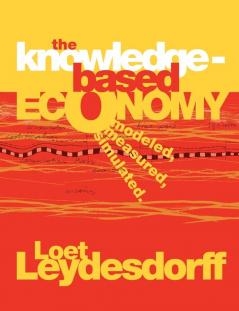
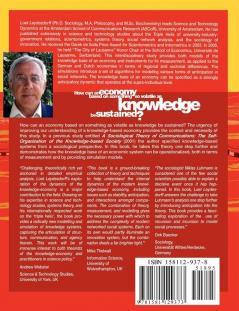
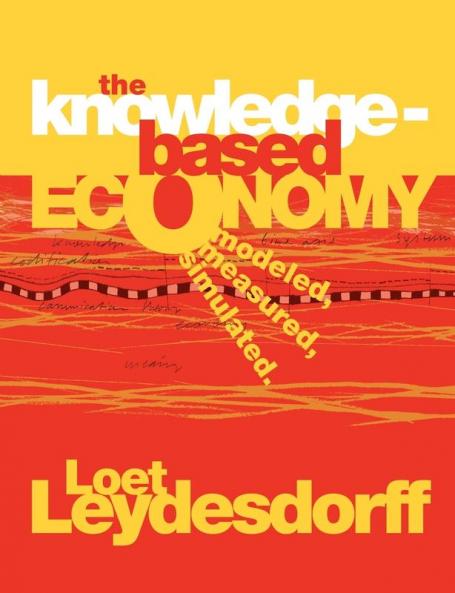
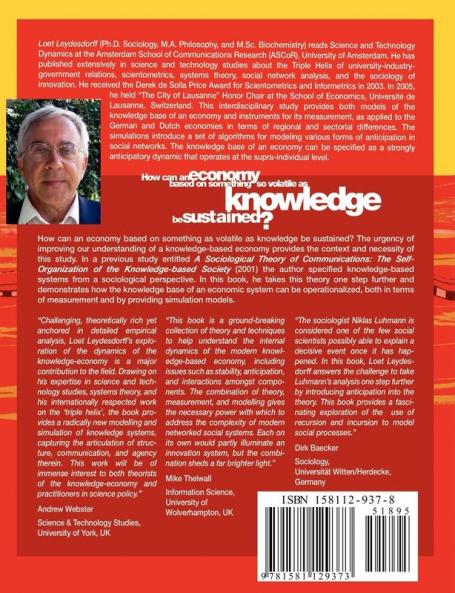
Challenging theoretically rich yet anchored in detailed empirical analysis Loet Leydesdorff's exploration of the dynamics of the knowledge-economy is a major contribution to the field. Drawing on his expertise in science and technology studies systems theory and his internationally respected work on the 'triple helix' the book provides a radically new modelling and simulation of knowledge systems capturing the articulation of structure communication and agency therein. This work will be of immense interest to both theorists of the knowledge-economy and practitioners in science policy. Andrew WebsterScience & Technology Studies University of York UK________________________________________This book is a ground-breaking collection of theory and techniques to help understand the internal dynamics of the modern knowledge-based economy including issues such as stability anticipation and interactions amongst components. The combination of theory measurement and modelling gives the necessary power with which to address the complexity of modern networked social systems. Each on its own would partly illuminate an innovation system but the combination sheds a far brighter light. Mike Thelwall Information Science University of Wolverhampton UK________________________________________The sociologist Niklas Luhmann is considered one of the few social scientists possibly able to explain a decisive event once it has happened. In this book Loet Leydesdorff answers the challenge to take Luhmann's analysis one step further by introducing anticipation into the theory. This book provides a fascinating exploration of the use of recursion and incursion to model social processes. Dirk Baecker Sociology Universität Witten/Herdecke Germany________________________________________How can an economy based on something as volatile as knowledge be sustained? The urgency of improving our understanding of a knowledge-based economy provides the context and necessity of this study. In a previous study entitled A Sociological Theory of Communications: The Self-Organization of the Knowledge-based Society (2001) the author specified knowledge-based systems from a sociological perspective. In this book he takes this theory one step further and demonstrates how the knowledge base of an economic system can be operationalized both in terms of measurement and by providing simulation models.

Piracy-free

Assured Quality

Secure Transactions
Details
ISBN 13
9781581129373
Publication Date
-18-08-2006
Pages
-392
Weight
-708 grams
Dimensions
-189x246x20.49 mm
