


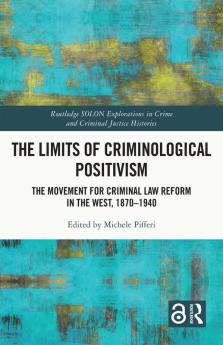



The Movement for Criminal Law Reform in the West, 1870-1940
Eng











₹4609
₹5886
21.7% OFF
(All inclusive*)
Paperback
Delivery Options
Please enter pincode to check delivery time.
*COD & Shipping Charges may apply on certain items.
Review final details at checkout.
Looking to place a bulk order? SUBMIT DETAILS
Delivery Options
Please enter pincode to check delivery time.
*COD & Shipping Charges may apply on certain items.
Review final details at checkout.
About The Book
Description
Author
Shoutouts
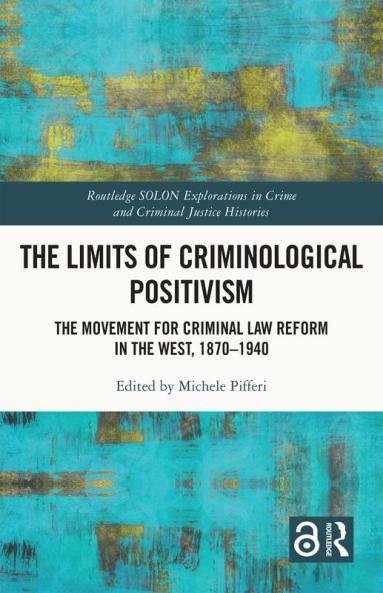
<p><em><strong>The Limits of Criminological Positivism: The Movement for Criminal Law Reform in the West 1870-1940</strong></em> presents the first major study of the limits of criminological positivism in the West and establishes the subject as a field of interest.</p><p>The volume will explore those limits and bring to life the resulting doctrinal procedural and institutional compromises of the early twentieth century that might be said to have defined modern criminal justice administration. The book examines the topic not only in North America and western Europe with essays on Italy Germany France Spain the United Kingdom Belgium and Finland but also the reception and implementation of positivist ideas in Brazil. In doing so it explores three comparative elements: (1) the differing national experiences within the civil law world; (2) differences and similarities between civil law and common law regimes; and (3) some differences between the two leading common-law countries. It interrogates many key aspects of current penal systems such as the impact of extra-legal scientific knowledge on criminal law preventive detention the ‘dual-track’ system with both traditional punishment and novel measures of security the assessment of offenders’ dangerousness juvenile justice and the indeterminate sentence. As a result this study contributes to a critical understanding of some inherent contradictions characterizing criminal justice in contemporary western societies.</p><p>Written in a straight-forward and direct manner this volume will be of great interest to academics and students researching historical criminology philosophy political science and legal history.</p><p><em>Chapter 2 of this book is available for free in PDF format as Open Access from the individual product page at www.routledge.com. It has been made available under a Creative Commons Attribution-Non Commercial-No Derivatives 4.0 license.</em></p>

Piracy-free

Assured Quality

Secure Transactions

Fast Delivery

Sustainably Printed
Details
ISBN 13
9781032133539
Publication Date
-31-05-2023
Pages
-302
Weight
-432 grams
Dimensions
-155.98x233.98x16.115250000000003 mm
